


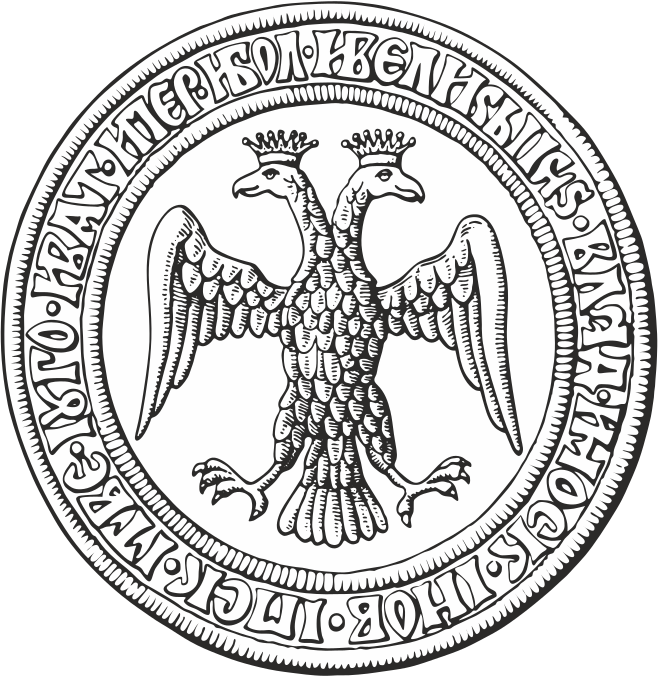
The Muscovy Merchants of 1555 (Thomas Stuart Willan)

Overview

This text provides a comprehensive biographical and economic examination of the original members of the Russia Company established in 1555, highlighting their prominent social standing, extensive global trading networks, and significant accumulation of personal wealth. Initially, the author outlines the hierarchical yet fluid nature of sixteenth-century English society, explaining the unique difficulties of classifying merchants alongside wealthy peers and crown officials who formed the company's elite core. Next, the narrative details the diverse commercial activities of the membership, demonstrating how these London merchants pioneered foreign trade ventures, managed joint-stock enterprises, and dominated the cloth export and shipping industries. Finally, the source illustrates the widespread financial success and inheritance practices of these entrepreneurs, revealing how their accumulated wealth in land, urban property, and personal estates was systematically distributed among their widows, apprentices, and children.
The Social and Economic Setting (Chapter I)
- Sixteenth-century English society was both hierarchical and fluid. Merchants held an uncertain place in both the social structure and contemporary opinion due to the diverse nature of their occupations, secular economic approaches, and involvement in foreign trade.
- London served as the primary commercial hub and funnel for the vast majority of England's foreign trade (e.g., handling upwards of 87-93% of cloth exports). This high volume enabled a greater specialization among London merchants compared to provincial outports.
- Chartered in 1555 following the 1553 voyage that discovered the White Sea route to Russia, the Russia Company was unique as a joint-stock enterprise established to pioneer a new, hazardous trade route. Members acted primarily as non-active investor shareholders rather than direct traders.
The Charter Members (Chapter II)
- The Russia Company's initial charter on February 26, 1555, named 201 members, uniquely featuring a heavy representation of high-ranking peers, crown officials, and judges at the top, alongside London merchants, two widows, and a single Bristol representative.
- Many prominent merchant members were first-generation Londoners who migrated from provincial middle-class families and rose to wealth and civic prominence (serving as aldermen or members of parliament).
- Members were tightly interconnected through blood, marriage, civic and national government roles, livery company memberships (such as Mercers, Drapers, and Grocers), and shared business/land investments as well as personal friendships.
Trading Activities (Chapter III)
- Around half of the identified charter members were actively engaged in foreign trade between 1547 and 1559, maintaining overlapping memberships in older regulated companies like the Staplers and Merchant Adventurers.
- Major merchants rarely specialized exclusively in a single commodity or country; they traded simultaneously across multiple regions (including France, Spain, Portugal, the Canaries, and the Baltic) and invested in emerging southern trade routes to Barbary and the Guinea coast, as well as early slave-trading voyages.
- Operations relied heavily on structured apprenticeships, resident factors abroad, and internal counting-house staff. Certain members operated on a large scale as shipowners and marine insurance underwriters.
Wealth (Chapter IV)
- Members displayed wide disparities in wealth, ranging from bankruptcy to vast fortunes comprising urban properties, rural manors, extensive plate, and large domestic and business staffs.
- Wills and customs of London dictated that personal estates were typically divided into portions for widows and children, with remaining portions applied to family bequests, servants, educational endowments, road repairs, and legacies to livery companies (often funding interest-free startup loans for young members).
- Charitable bequests favored educational institutions, hospitals, and direct relief for the poor over direct donations to the church.
Conclusion (Chapter V)
- The Russia Company brought together a diverse group whose prominent members played a central role in London's commercial life. Unlike the popular notion that successful merchants universally abandoned trade to become country gentry, most core merchant members and their sons remained active within London's merchant community.
Understanding Tudor Trade: Regulated vs. Joint-Stock Companies in Sixteenth-Century England
 By Alexander Litovchenko - Russian Museum, Public Domain
1. Introduction & Historical Setting: The Tudor Economy and the Rise of London
Sixteenth-century Tudor England was governed by an ostensibly rigid social framework. In contemporary theory, every individual occupied a fixed, unalterable station within a strictly defined rural hierarchy:
In practice, however, the unprecedented commercial expansion of the 1500s generated remarkable social mobility. Nowhere was this fluidity more pronounced than among the merchant class. Because traditional social categories applied primarily to land-based rural life, urban traders defied easy placement within the established order. Furthermore, the single umbrella term "merchant" masked extraordinary internal diversity—encompassing everyone from modest provincial shopkeepers, who combined petty retail with manual handicrafts, to the immensely wealthy "merchant princes" of London.
This rapid emergence of mercantile wealth provoked intense public debate among contemporary moralists, writers, and Crown officials, who held sharply conflicting views regarding the merchant's contribution to the realm:
- Contemporary Criticisms:
- Charges of Usury and Secular Financialism: Merchants' secular, profit-oriented financial methods alarmed traditionalists, who condemned interest-bearing loans and speculative exchange as damnable sins.
- The "Middleman" Stigma: Internal trade brokers and forestallers were frequently denounced as "caterpillars of the commonwealth" for allegedly cornering domestic commodity markets and artificially inflating food prices.
- Concerns Over Foreign Luxury Imports: Observers such as William Harrison and Sir William Cecil argued that the rising number of merchants overburdened the realm with unnecessary foreign luxury goods, draining England of precious bullion and threatening national economic strength.
- Contemporary Praise:
- Export Markets and Employment: Foreign merchants exported English manufactured goods—principally woollen cloth—providing vital employment for domestic weavers and spinners while generating significant customs revenue for the Crown.
- National Prestige and Wealth: Defending foreign trade, prominent intellectuals argued that overseas commerce expanded English influence and imported foreign treasure directly into the kingdom.
"The Lawyer in Thomas Wilson's Discourse upon usury declared that in the merchants' wealth resided 'the welfare of the realme,' extolling the foreign merchant adventurer as a figure who 'is and maye be taken for a lordes fellow in dignitie.' Similarly, the poet Thomas Lodge noted that 'no well governed state' could exist without merchants, who imported 'store of wealth from forrein nations.'"
This booming foreign trade became overwhelmingly concentrated in a single metropolitan hub: London. Serving as the primary commercial storehouse and funnel for the entire kingdom, the capital handled the vast majority of England's overseas commerce, as demonstrated by Crown customs records:
- Cloth Exports (1544): London handled 87% of all English cloth exports.
- Customs & Subsidy Receipts (1559–60): London accounted for 88% of total cloth and wine duties (£44,557 out of £50,705).
- Cloth Customs Receipts (1569): London paid 93% of the nation's total cloth customs exports.
This commercial concentration fundamentally altered London’s mercantile social structure. In smaller provincial ports, foreign trade volume was insufficient to support a merchant purely on export-import profits; provincial traders were forced to combine overseas voyages with local retail trade or handicraft manufacturing. In London, however, the massive scale of trade enabled advanced functional specialization. A distinct class of elite "mere merchants" emerged—traders who devoted themselves exclusively to foreign commerce and successfully excluded petty retailers and craftsmen from their wholesale trading guilds.
As these London merchant princes sought to push beyond traditional European markets, the extraordinary capital demands and physical perils of long-distance overseas routes required entirely new organizational and financial structures.
2. Organizational Mechanics: Regulated Companies vs. Joint-Stock Companies
To organize foreign trade, English merchants had historically relied upon the Regulated Company. However, as English commerce expanded into hazardous global markets during the mid-sixteenth century, merchant pioneers developed a revolutionary structural alternative: the Joint-Stock Company.
The Regulated Company Model
The traditional backbone of English foreign trade was the regulated company, exemplified by the Merchant Adventurers (who held a monopoly on exporting finished cloth to Antwerp) and the declining Merchants of the Staple (who managed the export of raw wool to Calais).
In a regulated company:
- The company existed primarily to enforce institutional trade rules, secure diplomatic monopolies overseas, and manage shared trade depots or "staples."
- Members traded using their own individual capital or private family partnerships.
- Each merchant operated independently, hired private factors (agents) to handle merchandise overseas, and personally assumed all financial risk for their shipments.
- To prevent market flooding and protect prices, the company imposed strict limits or "stints" on the total volume of goods an individual member could export.
The Joint-Stock Company Model
The joint-stock structure emerged as an institutional response to the extreme costs, delayed returns, and hazards of opening non-traditional trade routes. Formally incorporated on February 26, 1555, the Russia (Muscovy) Company became the first major English enterprise chartered under a permanent joint-stock corporate framework.
In a joint-stock company:
- The company traded as a single corporate entity using a unified, pooled capital fund.
- Individual members did not buy, ship, or sell merchandise privately. Instead, all commercial operations were managed centrally by an elected executive board (consisting of Governors, Consuls, and Assistants).
- Overseas factors and agents were employed, paid, and directed directly by the corporation, rather than by individual members.
- Profits, financial liabilities, and operational risks were distributed proportionately across the entire body of investors based on the number of corporate shares held.
| Organizational Criterion | Regulated Companies (e.g., Merchant Adventurers, Staplers) | Joint-Stock Companies (e.g., Russia Company) |
|---|---|---|
| Capital Sourcing | Private individual capital or private partnerships; no corporate pool. | Unified capital raised via corporate share subscriptions and calls on stock. |
| Trading Operations | Conducted individually by members trading on their own account within company "stints." | Conducted centrally by the corporation as a single entity under an executive board. |
| Factor Employment | Private factors hired, paid, and directed by individual merchants. | Corporate agents and factors hired, paid, and directed by the company board. |
| Investor Base | Restricted strictly to professional "mere merchants" actively trading in the market. | Open to active merchants as well as passive "rentier" investors (nobles, gentry, Crown officials). |
Bridging Court and Commerce
Because joint-stock investment did not require active, day-to-day commercial management or personal trading expertise, it invited participation from passive "rentier" investors. For the first time in English history, high-ranking Crown officials, nobility, and gentry partnered directly with urban traders, creating an unprecedented alliance between court and commerce.
This social alliance is illustrated by the 1555 charter list of 201 founding members for the Russia Company:
- Court & Crown Elites: 7 Peers (including the Marquis of Winchester, Lord High Treasurer; the Earl of Pembroke; the Earl of Arundel; and Lord Howard of Effingham, Lord High Admiral); 6 Knights and Esquires in high office (including Sir William Petre and Sir John Bourne, Principal Secretaries; Edward Griffin, Attorney General; and William Cordell, Solicitor General); and prominent Privy Councillors and royal advisers, most notably Sir William Cecil.
- Urban Commercial Leaders: 144 London Mere Merchants; 28 Aldermen (including 16 current or former Lord Mayors); and a single provincial merchant (Edward Pryme of Bristol).
This revolutionary joint-stock structure provided the financial engine required to tackle ultra-hazardous new global trade routes without subjecting individual traders to total ruin.
3. Financing the Unknown: Capital Mechanics and Investment Structures
The early financial history of the Russia Company illustrates the specific capital mechanics that made long-distance joint-stock enterprise possible in Tudor England.
Initial Capitalization and Calls on Stock
Between 1553 and 1555, the promoters of the Russian enterprise raised an initial capital fund of £6,000 by securing subscriptions of £25 per share from approximately 240 original investors. However, long-distance Arctic exploration, ship maintenance, factor salaries, and diplomatic gifts to Tsar Ivan IV quickly exhausted this original subscription pool.
To raise additional operational capital, the company faced a strategic choice: issue new shares or require further funds from existing shareholders. Issuing new shares would dilute existing ownership equity. Therefore, the company chose to raise funds by making mandatory Calls on Stock from its existing investor base, requiring shareholders to continually fund overhead and exploration costs.
- 1553–1555 Initial Share Subscription: The founding capital was established at £25 per share.
- Accumulated Calls by 1564: Over the first decade, repeated calls added £175 in capital obligations per share, bringing total share par value to £200.
- 1570 Additional Call: A targeted assessment added £50 per share, raising total par value to £250.
- 1572 Major Assessment: Facing heavy operational expenses, the company levied a large call of £200 per share, bringing the total cumulative investment per share to £450 (£25 initial subscription plus £425 in accumulated calls).
By 1572, an original shareholder who met every assessment had invested £450 per share—a fortune in Tudor England that underscored the deep capital commitment required by long-distance joint-stock enterprise.
Permanent vs. Temporary Joint-Stock
A critical financial distinction existed between different Tudor joint-stock endeavors:
- Permanent Capital Structure: The Russia Company retained its capital pool continuously across decades. Profits were distributed periodically from trade returns, but the principal corporate stock was retained and reinvested rather than liquidated at the end of annual voyages.
- Temporary Joint-Stock Syndicates: Unincorporated syndicates organized for West African Barbary, Guinea, and early slaving voyages operated on a temporary, voyage-by-voyage basis. Investors pooled capital for a single expedition; upon the fleet's return, the ships, imported commodities, and profits were completely liquidated and redistributed to investors, dissolving the syndicate.
Shares as Transferable and Trustee Assets
Because the Russia Company maintained a Permanent Capital structure, share ownership conferred distinct, legal property rights. Shares could be transferred, inherited, or used as long-term, yield-bearing Trustee Stock for minors—a revolutionary development in financial history. Prior to permanent corporate stock, assets left to minors had to be held in physical land or idle cash. Joint-stock shares allowed institutional dividends ("yearly increase") to fund maintenance and education while keeping the underlying principal capital productively invested in foreign commerce:
- Bequeathing Stock to Heirs: In his 1558 will, William Lewkner left his Russia Company stock to his two minor sons, stipulating that the corporate equity remain untouched in trust until they attained their legal majorities.
- Funding Maintenance via Dividends: In 1569, John Kempe willed Russia Company stock to his nephew. Kempe instructed his executors not to sell the stock, but to hold it intact until the nephew reached age 24. The annual dividend ("yearly increase") was dedicated to paying for the boy's upbringing and education, while £1 per year was paid to the company to maintain an official annual accounting of the stock.
With financial capital successfully organized into permanent corporate shares, English merchants turned to face the physical realities and deadly perils of overseas exploration.
4. Navigating Peril: Geography, Expeditions, and the Perils of Tudor Routes
The push into non-traditional trade networks was dictated by a stark geopolitical reality. In an address originally intended for King Henry VIII, the English merchant geographer Robert Thorne outlined the problem: Spain and Portugal claimed absolute monopolies over the Southern, South-Eastern, and South-Western ocean routes:
\text{South, South-East \& South-West Routes} \longrightarrow \text{Monopolized by Spain \& Portugal} \text{North-East \& North-West Routes} \longrightarrow \text{Open to English Exploration}No English investor sought the freezing Northern seas for their own sake; rather, the North-East passage was viewed as the only open route to access the gold, silks, and spices of Cathay (China) and the East Indies.
The Northern Route: Russia & Overland Persia
- The 1553 Expedition: A fleet of three ships set sail under Sir Hugh Willoughby and Richard Chancellor. While Willoughby and two ships were trapped in Arctic ice—resulting in the freezing deaths of all on board—Richard Chancellor’s ship, the Edward Bonaventure, reached the White Sea. Chancellor traveled overland to Moscow, establishing England's first formal trade contacts with Tsar Ivan IV.
- Operational Perils & Mortality: The Northern route presented severe physical hazards:
- Shipwrecks: In November 1556, while returning from Russia carrying Osep Napea (the first Russian ambassador to England), the Edward Bonaventure was wrecked off the coast of Scotland. Chancellor drowned while successfully saving the ambassador.
- Overland Hazards in Persia: To extend trade into Persia, company factors undertook grueling overland expeditions down Russian river systems. Climate extremes and unwholesome conditions took a heavy toll: Arthur Edwards died of disease at Astrakhan in 1580 during the sixth Persian voyage, while Thomas Bannister died at Arrash in July 1571 due to extreme summer heat and contaminated water.
The Southern Route: Africa & the Canaries
Simultaneously, key Russia Company charter members formed unincorporated joint-stock syndicates to challenge Iberian monopolies in the South:
- Syndicate Leadership: Unincorporated ventures to Barbary, the Guinea coast, and early slaving voyages (such as John Hawkins' voyages in 1562, 1564, and 1567) were financed by prominent Russia Company leaders, including Sir William Garrard, Sir William Chester, Sir Thomas Lodge, Anthony Hickman, Edward Castelin, and Sir Lionel Duckett.
- Legal, Military, and Religious Perils:
- Armed Seizures: Portuguese and Spanish naval forces routinely attacked English vessels. Garrard and Chester lost ships seized off Elmina in 1565 and the Azores in 1566, while Henry Fallowfield’s vessel was impounded at Bilbao in 1565 under pretexts of piracy.
- Inquisition and Fines: English factors stationed in the Canary Islands faced severe legal and religious persecution. Edward Kingsmill (factor for Hickman and Castelin) was fined 1,000 ducats for currency and accounting infractions, having kept his ledgers in English rather than Spanish. Meanwhile, factor Thomas Nicholas was arrested on religious charges by the Spanish Inquisition and imprisoned for three years, causing thousands of ducats in commercial losses.
Holding these high-risk global ventures together was a close-knit human network back home in London.
5. The Human Network: Merchant Alliances, Livery Guilds, and Social Legacy
The high-risk world of Tudor joint-stock enterprise relied heavily on personal trust, guild ties, and family networks among London's commercial leaders.
Kinship and Marriage Alliances
To consolidate commercial capital, manage risk, and maintain corporate control across generations, elite London merchant families established dense intermarriages. A prominent example is the family of Humphrey Packington: his three daughters married four charter members of the Russia Company and the brother of a fifth:
- Letitia Packington married Sir Roger Martin (Russia Company charter member).
- Jane Packington married first Humphrey Baskerfeld (charter member) and second Sir Lionel Duckett (Russia Company Governor).
- Anne Packington married first Edward Jackman (charter member) and second James Bacon (brother of Sir Nicholas Bacon, Lord Keeper and charter member).
Similarly, the family of Sir George Barne established broad connections across court and commerce: his son George married Anne, daughter of Russia Company Governor Sir William Garrard; his daughter Elizabeth married Alderman Sir John Rivers; and his daughter Anne married first the Russia merchant Alexander Carleill and second Sir Francis Walsingham, Queen Elizabeth's Principal Secretary.
Livery Company Roots
Virtually every active London member of the Russia Company was rooted in one of the Great Livery Companies (such as the Mercers, Drapers, Grocers, Merchant Tailors, Skinners, or Ironmongers). These guilds provided professional training through apprenticeship, conferred the freedom of the city, and served as institutional foundations for urban governance.
Guild leaders frequently served as the Master—the supreme elected executive head of a trade guild—often holding office for multiple terms:
- Christopher Draper: 8 times Master of the Ironmongers Company.
- Philip Gunter: 8 times Master of the Skinners Company.
- Sir Andrew Judde: 6 times Master of the Skinners Company.
- Sir William Chester: 5 to 7 times Master of the Drapers Company.
- Sir Lionel Duckett: 4 times Master of the Mercers Company.
Social & Philanthropic Legacy
When wealthy merchants drew up their wills, they directed their accumulated wealth primarily into secular community institutions rather than church buildings:
- Civic Loan Funds as Capital Incubators: Merchants bequeathed substantial sums to their livery guilds to establish revolving loan funds for young apprentices and "young beginners." Humphrey Baskerfeld left £200 to the Mercers; Anthony Gamage left £400 to the Ironmongers; and Philip Gunter left £100 to the Skinners to assist young upholsterers. These funds functioned as non-landed capital incubators, enabling non-wealthy young men to start businesses and driving urban class continuity across generations.
- Educational Foundations: Merchants invested heavily in civic education. Sir Thomas White founded St. John’s College, Oxford, and co-founded the Merchant Taylors School; Sir Andrew Judde founded Tonbridge School in Kent; Sir Thomas Gresham founded Gresham College in London; and over two dozen Russia Company members left direct maintenance legacies to Christ’s Hospital.
- Rootedness in London Commerce: Historical evidence disproves the myth that wealthy Tudor merchants routinely abandoned urban trade to buy rural manors and disappear into the landed aristocracy. While many purchased country estates as financial investments, the vast majority of merchant families remained rooted in London commerce, passing their guild freedoms, commercial capital, and corporate shares down to their children.
Core Takeaway: Tudor overseas expansion was not driven by isolated speculators. It depended on a dense, resilient network of London merchant families bound together by guild leadership, strategic intermarriage, and civic philanthropy.
Bridging these complex human networks and structural financial innovations, the essential concepts of sixteenth-century English trade evolution can be summarized for systematic study.
6. Summary Primer: Essential Takeaways for the Learner
- The Shift to Corporate Capital: Sixteenth-century English trade underwent a fundamental institutional transition from individual trading in Regulated Companies (such as the Merchant Adventurers) to collective corporate investment in Joint-Stock Companies (such as the Russia Company).
- London as the Trade Hub: By handling up to 93% of England's primary exports, London generated the trade volume necessary for a dedicated class of specialized "mere merchants" to emerge, free from the need to conduct local retail trade or manual handicrafts.
- The Court-Commerce Alliance: The joint-stock structure allowed passive "rentier" investors—including nobility, Privy Councillors, and royal secretaries like Sir William Cecil—to invest capital without engaging in day-to-day trade, creating an unprecedented partnership between royal political power and urban commercial wealth.
- Permanent Capital & Calls on Stock: Unlike single-voyage syndicates, the Russia Company built a permanent capital pool. To fund ongoing operations and exploration without diluting ownership equity, the company relied on mandatory Calls on Stock, increasing the total par value of a single share from £25 in 1553 to £450 by 1572.
- Revolutionary Trustee Assets: Permanent joint-stock shares created transferable corporate equity. Shares could be bequeathed in wills as yield-bearing Trustee Stock, allowing dividends ("yearly increase") to fund the upbringing and education of minor heirs while keeping principal capital productively invested in foreign trade.
- Perilous Exploration & Monopoly Challenges: Excluded from Southern trade routes by Spanish and Portuguese monopolies, English investors financed risky expeditions to find a North-East passage, establishing trade links with White Sea Russia and overland Persia while fighting hostile forces along West Africa and the Canaries.
- Social Cohesion & Civic Philanthropy: High-risk overseas ventures were supported domestically by tight-knit human networks. Bound together by guild leadership and intermarriage, London’s merchant leaders directed their wealth into enduring civic legacies—funding grammar schools, university colleges, and revolving youth loan funds that incubated new business ventures across generations.
Sixteenth-Century London’s Social Ladder: Provincial Migration, Merchant Careers, and Domestic Life
1. Introduction: The Fluidity of Tudor Society and the Rise of the Merchant
Sixteenth-century English society was defined by a striking paradox: it maintained a rigid theoretical hierarchy that assigned every individual a distinct, ordained place, yet possessed a practical flexibility that enabled dynamic upward and downward social mobility. Traditional Tudor classifications categorized men into rural gradations—labourer, husbandman [Husbandman: a smallholder farmer holding less property than a yeoman], yeoman, gentleman, esquire, and knight. However, the rapidly expanding urban merchant fit uncomfortably within this traditional order, creating a profound mercantile ambiguity. The term "merchant" itself encompassed a vast occupational spectrum, ranging from modest provincial tradesmen and craftsmen engaged in localized trade to the ultra-wealthy merchant princes of London conducting international enterprise.
Because of this occupational diversity, merchants occupied a contentious position in contemporary public opinion. Moralists and statesmen frequently viewed their secular economic methods with suspicion, while simultaneously recognizing that their overseas commerce was essential to national prosperity. Social critics condemned usury and middleman speculation, while commentators like William Harrison complained that the multiplication of merchants was "the cause of the exceeding prices of foreign wares." In 1564, Sir William Cecil expressed misgivings that short returns from Antwerp overburdened the realm with "unnecessary foreign wares." Yet defenders like the Lawyer in Thomas Wilson’s Discourse upon Usury celebrated the overseas trader as "a lord's fellow in dignitie," whose accumulation of wealth secured "the welfare of the realme." Similarly, Thomas Lodge observed that while merchants might enrich "themselves mightelye by others misfortunes" and eat "our English gentrie out of house and home," no well-governed state could exist without those who brought in "store of wealth from foreign nations."
This concentration of wealth was heavily centered in the capital. London served as the primary funnel for England's overseas commerce, handling 87% of the nation's total cloth exports in 1543–44. By 1559–60, London generated 88% of all domestic customs and subsidy revenues on cloth and wine (£44,557 out of £50,705), a figure that climbed to 93% of all cloth customs by 1569.
| Contemporary Critiques of Merchants | Contemporary Praise of Merchants |
|---|---|
| Usury & Secular Ethics: Condemned by religious commentators for secular financial operations and charging interest on loans. | National Wealth: Extolled by legal figures like Wilson's Lawyer for generating wealth that constituted "the welfare of the realme." |
| Middlemen as Parasites: Derided as "caterpillars of the commonwealth" who manipulated markets and inflated domestic food prices. | Crown & Fiscal Support: Provided a vast tax, loan, and credit base easily tapped by the Crown for royal finance and military needs. |
| Importing Luxury Goods: Criticized by William Harrison and Sir William Cecil for overburdening the realm with "unnecessary foreign wares." | Export Outlets & Employment: Stimulated the domestic economy by exporting English manufactures, particularly cloth, sustaining widespread employment. |
| Social Disruption: Accused by critics like Thomas Lodge of enriching themselves on others' misfortunes and "eating our English gentrie out of house and home." | Social Dignity: Celebrated by contemporary defenders as an indispensable pillar of state stability, acting as "a lord's fellow in dignitie." |
Key Historical Insight Tudor social structure was defined by a tension between a fixed rural hierarchy and an increasingly fluid urban economy. London’s commercial dominance—monopolizing up to 93% of cloth export customs—transformed the capital into a unique theater of upward mobility where wealth could override traditional social boundaries.
This powerful dynamic of hierarchical fluidity made Tudor London a vibrant center of opportunity, creating a powerful magnet for ambitious young men outside the capital.
2. The Provincial Pipeline: Migration, Apprenticeship, and Assimilation
Upward mobility in Tudor England was rarely a simple "rags-to-riches" story of destitute boys arriving in London to make sudden fortunes. Instead, it was typically prosperous, middle-class provincial families—such as local clothiers, stewards, or prominent burgesses—who strategically sent their sons to the capital. These young men gained the freedom of the city through years of rigorous apprenticeship [Apprenticeship: a contractual seven-to-seven-year term of indentured training under a master merchant, conferring the "freedom of the city" upon completion] in a London livery company, converting provincial capital into metropolitan influence.
The trajectories of five prominent sixteenth-century figures demonstrate this provincial pipeline:
- Sir Andrew Judde
- Birthplace: Barden, near Tonbridge, Kent.
- Family/Social Background: Born into a established family of Kentish gentry.
- London Entry Point & Career Peak: Apprenticed as a boy to John Buknell, skinner and merchant of the staple [Merchant of the Staple: a member of the Staplers' Company holding a monopoly over raw wool exports, traditionally directed through Calais]. He rose to become Master of the Skinners Company six times, an Alderman, Lord Mayor of London (1550–1551), and Mayor of the Staple (1552, 1558).
- Sir Thomas White
- Birthplace: Reading, Berkshire.
- Family/Social Background: Son of a prosperous provincial clothier.
- London Entry Point & Career Peak: Apprenticed at age 12 to the London merchant tailor Hugh Acton. He advanced to become a master clothier, a leading figure in the Merchant Tailors Company, an Alderman, and Lord Mayor (1553–1554).
- Sir Thomas Offley
- Birthplace: Stafford (migrating to London via Chester).
- Family/Social Background: Born in Stafford to a family that migrated to Chester, where they became prominent civic benefactors and city leaders.
- London Entry Point & Career Peak: Entered London as an apprentice under the merchant tailor John Nicholls. He advanced to become an Alderman, Lord Mayor (1556–1557), and Mayor of the Staple across four separate terms (1560, 1564, 1565, 1569).
- Philip Gunter
- Birthplace: Monmouthshire, Wales.
- Family/Social Background: Born into a respectable Welsh provincial family.
- London Entry Point & Career Peak: Migrated to London to enter commercial trade, becoming a master skinner and upholsterer. He achieved high institutional standing as Master of the Skinners Company eight times, while actively maintaining a provincial trade footprint by obtaining city licenses from the Oxford city council to sell upholstery wares within their liberties.
- Rowland Heyward
- Birthplace: Bridgnorth, Shropshire.
- Family/Social Background: Educated in Shropshire, coming from a well-established local family.
- London Entry Point & Career Peak: Entered London commerce through apprenticeship, rising to become an Alderman, a multi-term Governor of the Russia Company, and Lord Mayor of London (first serving in 1570–1571).
Key Historical Insight Urban migration was a calculated family investment strategy rather than a desperate flight from poverty. Middle-class provincial lineages systematically placed sons into London livery apprenticeships to convert regional agricultural capital into international commercial enterprise.
Once established in the capital, these successful migrants did not operate as isolated individuals, but consolidated their status by weaving an intricate web of social and civic alliances.
3. Weaving the Web: Kinship, Social Connections, and Civic Leadership
London’s merchant elite maintained their economic and political dominance through strategic networks built on blood and marriage alliances, civic leadership, and royal administrative service. Rather than competing in isolation, prominent mercantile families interconnected their wealth to secure business credit and political protection.
The Barne Family Alliance
The family of Sir George Barne (Haberdasher, Alderman, and Lord Mayor) illustrates how marriage cemented elite mercantile circles. His son George married Anne, daughter of Sir William Garrard (Alderman and Lord Mayor). His daughter Elizabeth married Sir John Rivers (later Lord Mayor). His second daughter, Anne, married first the merchant Alexander Carleill and, following his death, Sir Francis Walsingham, Queen Elizabeth’s principal secretary and a member of the Russia Company.
The Packington Kinship Web
The three daughters of Humphrey Packington (a prosperous merchant) constructed an extensive network across multiple marriages. Letitia married Roger Martin (Mercer, Alderman, Lord Mayor). Jane married first Humphrey Baskerfeld (Mercer, Alderman) and second Sir Lionel Duckett (Mercer, Alderman, Lord Mayor). Anne married first Edward Jackman (Alderman, Sheriff) and second James Bacon (Fishmonger, Alderman, and brother to Lord Keeper Sir Nicholas Bacon). Furthermore, their cousin Anne Packington married Alderman Richard Mallory.
These major webs were reinforced by numerous secondary intermarriages among commercial families. Henry Becher’s son William married Judith Quarles, daughter of Russia Company charter member John Quarles. Christopher Draper’s daughter Bridget married David Woodroff’s son Stephen. Similarly, Thomas Offley married Joan Nicholls, the daughter of his former apprenticeship master John Nicholls, while Offley's sister Margaret married Nicholls himself.
Beyond private kinship, merchants integrated themselves into the governance of London and the Crown’s administrative apparatus:
- Civic & Parliamentary Leadership: Among the charter members of the Russia Company alone, at least 28 served as Aldermen, 16 reached the office of Lord Mayor, and 32 sat in the House of Commons as Members of Parliament.
- Financial Agents to the Crown: Merchant elites managed royal foreign borrowing on continental money markets, including financial agents such as Sir John Gresham the elder, Thomas Gresham, Sir William Dansell, Christopher Dauntsey, John Dymocke, and Edward Castelin.
- Customs Administration: Numerous merchants directed customs collection in London and regional ports, including Sir Richard Blount (collector at Southampton), Sir Henry Jerningham, William Clifton, Thomas Colshill, Edmund Lomnour, Robert Dove, Richard Patrickes, Francis Robinson, Thomas Smith, and Richard Young.
- Mint Management & Assaying: Key merchants held positions overseeing the monetary supply, such as Sir John York (Master of the Mint), Thomas Egerton (Under-Treasurer), and assay masters William Humfrey, William Knight, Thomas Gravesend, and William Billingsley.
Key Historical Insight Mercantile dominance relied on overlapping institutional roles. By combining marital alliances, municipal governance, parliamentary representation, and royal administrative offices, London merchants transformed commercial wealth into self-reinforcing political power.
This tight alignment of social elite connections and public office provided a secure foundation for participation in prestigious commercial institutions and novel trading ventures.
4. Institutional Pillars: Livery Companies and Foreign Trade Enterprise
The career of a sixteenth-century London merchant rested upon two institutional foundations: traditional city Livery Companies [Livery Company: a trade guild granted corporate rights by the City of London, controlling apprenticeship, market standards, and civic governance] and international trading syndicates. While trade within European markets was governed by traditional regulated companies [Regulated Company: a corporate guild where merchants traded using their own private capital and factors while adhering to shared company rules], distant exploration prompted the adoption of the joint-stock organization [Joint-Stock Company: an incorporated enterprise with pooled permanent capital divided into shares, trading as a single corporate entity].
Long-distance northern trade—such as the Russia enterprise—demanded joint-stock mechanics. Voyages to the White Sea involved capital lockups lasting months or years, extreme maritime hazards, and the necessity of negotiating with foreign despots like Tsar Ivan IV through centralized corporate agents rather than competing private factors.
| Structural Dimension | Regulated Companies (e.g., Merchant Adventurers, Staplers) | Joint-Stock Companies (e.g., Russia Company, inc. 1555) | Key Structural Distinction |
|---|---|---|---|
| Capital Structure | Members traded using their own individual capital or private partnerships. | Capital was permanently pooled into corporate stock raised via share calls. | Regulated capital remained private; Joint-stock capital was centralized and corporate. |
| Trading Method | Members traded individually, managing their own shipments and employing personal factors. | The company traded as a single corporate entity using paid corporate agents and factors. | Regulated members managed daily sales; Joint-stock investors left operations to hired directors. |
| Investor Diversity | Strictly restricted to "mere merchants" [Mere Merchant: a trader engaged exclusively in wholesale foreign commerce, prohibited from retail or manual handicraft]. | Included non-merchants, peers, Privy Councillors, and high court officials alongside merchants. | Joint-stock structures allowed passive investment from non-mercantile elites. |
| Risk Distribution | Direct individual exposure; profits and losses were borne entirely by the individual trader. | Corporate risk was shared among all shareholders; stock could be inherited or held for minors. | Joint-stock structures distributed financial risk across a broad pool of equity holders. |
The capital structure of the Russia Company evolved through sequential calls. The original 1553 enterprise raised £6,000 via 240 shares at £25 each. To finance expanding operations, the company levied assessments on existing shares, raising total capital calls to £175 per share by 1564, £225 by 1570, and reaching a total par value of £450 per share by 1572 (£425 in calls added to the original £25 subscription).
Because joint-stock shares generated annual dividends without requiring operational management, they operated as early "trustee stock" held for minors. In his 1558 will, William Lewkner willed his Russia Company stock to his two sons to be held until their majorities. Similarly, John Kempe’s 1569 will instructed that his share in the company be held for his nephew until age 24, using the "yearly increase" (dividends) for the boy's upbringing while paying the company £1 annually for audited accounting.
Despite the rise of overseas trading syndicates, traditional London Livery Companies retained a central role in a merchant's social and professional life. The principal companies represented among the Russia Company charter members included:
- Mercers: Claimed at least 13 charter members (5 Masters), including Sir Lionel Duckett (4 times Master) and Sir Richard Mallory (3 times Master).
- Drapers: Included 10 members (4 Masters), featuring Sir William Chester (at least 5 times Master) and Sir John Branche (4 times Master).
- Grocers: Comprised 8 members, including 2 Masters.
- Merchant Tailors: Represented by 7 members, including 4 Masters.
- Skinners: Included 6 members (3 Masters), highlighted by Sir Andrew Judde (6 times Master) and Philip Gunter (8 times Master).
- Ironmongers: Comprised 4 members (3 Masters), notably Christopher Draper (8 times Master).
Key Historical Insight The joint-stock model represented an institutional innovation designed to manage high-risk, long-distance trade. By pooling permanent capital and separating ownership from management, it enabled long-term capital accumulation and introduced passive equity investment to English commerce.
Beyond these public institutional structures and international corporate ventures lay the private realm of the merchant's domestic household, personal property, and family estate management.
5. Inside the Merchant's World: Domestic Life, Wealth, and Inheritance
The legal management of personal wealth in sixteenth-century London differed from the primogeniture systems [Primogeniture: the legal requirement allocating all landed real estate exclusively to the eldest son] common among the landed country gentry. While landed gentry preserved rural manors by concentrating estates in a single male heir (leaving younger sons landless), urban London law redistributed personal wealth. Through mandated cash distributions, younger sons received liquid commercial capital to launch independent trades, while daughters received marriage portions.
The "Custom of London" Tripartite Estate Division
Under the Custom of London, a deceased citizen’s personal estate was partitioned into three equal shares:
- One-Third to the Widow: Secured dower rights, lifetime tenure of urban dwellings, and personal property rights.
- One-Third to the Children: Distributed equally among surviving children as "orphanage portions" [Orphanage Portions: legally mandated cash distributions paid equally to all surviving children from a deceased citizen's personal estate]. This provided daughters with marriage dowries and younger sons with business capital.
- One-Third to the Testator's Disposal: A discretionary fund allocated for personal bequests, retainer gifts, educational grants, and charities.
Legal Exceptions: If a testator died childless, the estate was split equally: one-half to the widow and one-half to the testator’s disposal. If the testator left surviving children but no widow, the split was one-half to the children and one-half to the testator's disposal.
This legal framework influenced household structure and lifestyle in several ways:
- Grand Urban Residences: Wealthy merchants maintained large London estates capable of hosting foreign dignitaries. William Bond resided in Crosby Place (a mansion to which he added a high turret), John Dymocke hosted the Russian ambassador in his Fenchurch Street home, and Philip Gunter conducted business from the Sarazen's Head in Cornhill.
- Secondary Country Retreats: Merchants frequently acquired secondary rural estates (e.g., Sir John Branche’s Garnish Hall in Essex; Sir Rowland Heyward’s country house in Hackney) for leisure and to escape urban plague outbreaks. However, urban messuages, shops, cellars, and wharves remained the core of their asset portfolios.
- Household Staff Composition: Merchant households relied on structured staffs. These included counting-house apprentices learning the trade, foreign factors [Factor: a commercial agent residing overseas who managed shipments, sales, and purchases on behalf of a merchant], female domestic servants (e.g., William Bond left £100 to "Besse, my maid"), and wet nurses. In large operations, factors worked in "double harness"; Sir Roger Martin employed William Rawlyns and James Elwike in Hamburg with equal legal powers, requiring each to keep the other informed of all transactions.
- Apprentice Bequests: Master merchants frequently rewarded senior apprentices in their wills. A notable example occurred in 1566, when Sir Thomas White bequeathed his "freedom of Moscovia" (his share in the Russia Company) directly to his apprentice Gilbert Moxsey.
Key Historical Insight The Custom of London prevented the concentration of urban wealth in a single line. By legally partitioning personal estates into thirds, London law provided widows with financial independence and supplied younger children with the liquid capital needed to maintain commercial mobility.
It was through the discretionary "testator's third" that a merchant could extend his influence beyond family obligations to forge an enduring civic legacy.
6. Legacy and Civic Philanthropy: The Merchant's Final Accounting
Sixteenth-century testamentary practices reflected a combination of religious tradition and secular civic duty. Merchants directed their discretionary wealth toward specific channels designed to foster social stability, support young tradesmen, expand education, and preserve their post-mortem memory.
| Category of Philanthropy | Primary Rationale & Function | Historical Examples from Context |
|---|---|---|
| Livery Company Loan Stocks | Provided interest-free capital or charcoal-producing loans to help young apprentices set up independent businesses. | • Humphrey Baskerfeld: Bequeathed £200 to the Mercers, requiring borrowers to deliver two loads of charcoal annually for the poor. • Anthony Gamage: Left £400 to the Ironmongers for capital loans to young men. • Philip Gunter: Left £100 to the Skinners specifically for young beginners in upholstery. |
| Educational Foundations & Grammar Schools | Funded grammar school endowments and university scholarships to encourage literacy, divinity studies, and civic leadership. | • Sir Thomas White: Founded St. John’s College, Oxford, and co-founded the Merchant Taylors School. • Sir Andrew Judde: Founded Tonbridge School in Kent. • William Dawkes: Left £40 for building and endowing a free school at Droitwich. • Sir Rowland Heyward: Endowed his former school at Bridgnorth with £20 annually. • Robert Wolman: Bequeathed London and Middlesex property to erect and endow a free school at Uxbridge. |
| Commemorative Rituals & Sermons | Endowed public funeral sermons and funded black gowns for poor citizens attending funeral processions to ensure post-mortem honor. | • Philip Gunter: Endowed two perpetual annual sermons at St. Michael Cornhill and provided gowns for 92 poor attendees. • Sir Roger Martin: Provided for 20 sermons at Mercers Chapel and funded 100 gowns for poor men and women. • Sir Thomas Lodge: Bequeathed money and new gloves for 78 poor funeral attendees. |
| Civic Infrastructure & Poor Relief | Improved urban health and municipal security by funding water conduits, grain reserves, hospitals, and road repairs. | • William Bond: Bequeathed £500 to the City of London specifically for purchasing municipal wheat reserves. • Edward Jackman & David Woodroff: Left £100 and £20 respectively for London water conduits. • Sir Christopher Draper: Allocated £20 for Thames river clearance and £60 for highway repair between London and Hertfordshire. • Sir John Gresham: Bequeathed £50 to repair foul roads within 20 miles of London. • General Bequests: Provided funding for Christ's Hospital, St. Thomas's, St. Bartholomew's, and city prisons. |
Key Historical Insight Merchant philanthropy served as an informal social safety net and a mechanism for status preservation. By recycling urban profits into loan stocks, grammar schools, and municipal infrastructure, dying merchants stabilized the commercial environment for future generations while securing their own civic memory.
Driven by provincial ambition and empowered by metropolitan trade, sixteenth-century merchants reshaped London into a prominent commercial center through institutional innovation and strategic social networking. By channeling their wealth into civic infrastructure, educational foundations, and social stewardship, these enterprising migrants left an indelible mark on the urban ladder and social fabric of Tudor England.
Research Report: Corporate Structure, Capital Allocation, and Joint-Stock Evolution in Tudor Overseas Enterprises
1. The Sixteenth-Century Economic Landscape and Metropolitan Primacy
In the mid-sixteenth century, English economic policy faced a profound structural crisis. The established commercial architecture, overwhelmingly reliant on the bulk export of un-dyed woollen broadcloths to the staple market at Antwerp, proved dangerously vulnerable to continental warfare, market gluts, and Habsburg geopolitical pressures. To preserve crown customs solvency, protect domestic textile employment, and secure national power, Tudor statesmen and commercial leaders recognized the strategic imperative of establishing direct, long-distance trade routes to alternative global markets. Central to this strategy was the institutional concentration of commercial administrative power within London. Metropolitan trade concentration provided the requisite financial liquidity, administrative scale, and regulatory discipline to undertake high-risk overseas expeditions, ultimately driving the evolution of innovative corporate structures capable of pooling private capital for state-sanctioned economic expansion.
The sixteenth-century English merchant occupied an ambiguous and highly fluid position within a social hierarchy that theoretically categorized individuals across rural gradations—from laborer, husbandman, and yeoman to gentleman, esquire, and knight. As predominantly urban dwellers, foreign traders did not fit neatly into land-based class schemas. Furthermore, the occupational designation "merchant" encompassed an expansive spectrum, ranging from provincial shopkeepers and craftsmen to the elite commercial magnates of the capital. This structural fluidity generated acute anxiety among articulate contemporary commentators. Traditional moralists viewed the merchant’s secular approach to pricing and credit as bordering on sinful usury, while speculative operatives conducting trade across space and time were frequently denounced as "caterpillars of the commonwealth," accused of market manipulation and artificial engrossing. Statesmen like Sir William Cecil expressed persistent anxiety that the unrestricted importation of foreign luxury wares drained the realm of precious bullion and encouraged domestic extravagance.
Conversely, the crown increasingly recognized merchant capital as indispensable to state power and fiscal survival. Overseas merchants generated the custom revenues that financed crown operations, sustained export demand for the domestic cloth manufacturing sector, and enhanced international prestige. Contemporary economic literature reflected this dual perception. In Thomas Wilson’s A Discourse upon Usury, the Lawyer explicitly observed that merchant wealth represented "the welfare of the realme," asserting that the major merchant adventurer "is and maye be taken for a lordes fellow in dignitie." Yet, as the writer Thomas Lodge noted in An Alarum against Usurers, while no well-governed state could endure without foreign traders bringing in "store of wealth from forrein nations," their aggressive capital accumulation simultaneously enriched them through others' misfortunes, threatening to eat "our English gentrie out of house and home." Despite periodic complaints from commentators like William Harrison—who argued that an over-multiplication of merchants caused inflated prices for unnecessary foreign goods—the Tudor crown actively cultivated London's commercial elite as vital financial and geopolitical partners.
This reliance was underwritten by the structural concentration of foreign commerce through the Port of London, which reached unprecedented levels during the middle Tudor period. Official customs and subsidy returns demonstrate London's systematic absorption of national trade flows, particularly regarding the paramount export commodity: broadcloth.
| Fiscal Period | London Share of National Cloth Trade & Custom Receipts |
|---|---|
| 1543–1544 (Fiscal year ending Michaelmas 1544) | ~87% of total national cloth exports shipped through the Port of London. |
| 1559–1560 (Michaelmas 1559–Michaelmas 1560) | 88% of total national custom and subsidy on cloth and new wine impositions (£44,557 out of £50,705 total).* |
| 1568–1569 (Fiscal year ending Michaelmas 1569) | 93% of total national customs receipts derived from cloth exports collected at London. |
*Note: The 1559–1560 total reflects custom and subsidy on cloth exports alongside the new impositions on wines.
This canalization of commercial volume through London fundamental altered the institutional composition of the metropolitan merchant class. The massive trade turnover passing through the Thames enabled a functional specialization impossible in provincial outports. In London, a specialized elite of "mere merchants" emerged—men exclusively dedicated to wholesale foreign commerce who were completely divorced from retail trade and manual handicrafts. When chartered monopoly companies attempted to enforce strict regulations excluding retailers and artisans, they provoked fierce resistance in provincial outports like Bristol and Newcastle, where lower trade volumes forced merchants to combine overseas ventures with local retail operations. In London, however, functional specialization was fully sustained by the market. This specialized elite accumulated vast operational experience, centralized capital reserves, and dense administrative networks, laying the institutional groundwork necessary to govern complex, chartered corporate enterprises designed to navigate the physical and financial perils of long-distance oceanic routes.
2. Structural Architecture and Capital Dynamics of the Russia Company (1555)
In May 1553, a syndicate of London merchants dispatched three vessels under Sir Hugh Willoughby and Richard Chancellor to discover a North-East Passage to Cathay and the East Indies. Carrying formal crown letters addressed to "all kings, princes, rulers, judges, and governours of the earth," the expedition sought an exclusive northern route to bypass the global maritime monopolies established by Spain and Portugal under papal sanction. Although Willoughby and his crew perished in Lapland, Chancellor successfully navigated into the White Sea and traveled overland to Moscow, establishing direct diplomatic and commercial relations with Tsar Ivan IV. Building upon this commercial breakthrough, the initiative secured formal royal incorporation on February 26, 1555, as the Russia Company (officially titled the Merchant Adventurers of England for the Discovery of Lands, Territories, Isles, Dominions, and Seigniories Unknown). The charter granted the enterprise a strict crown monopoly over all trade with Russia and all un-frequented northern, north-eastern, and north-western oceanic routes.
The organizational framework established by the 1555 charter represented a radical departure from the traditional regulated company paradigm that had governed early English foreign commerce, such as the Merchants of the Staple or the Merchant Adventurers.
txt
+-----------------------------------------------------------------------------------+
|                        COMPARATIVE OPERATIONAL PARADIGMS                          |
+-----------------------------------------------------------------------------------+
| REGULATED COMPANY MODEL (e.g., Merchant Adventurers / Staplers)                   |
|  - Members trade on individual private capital accounts.                          |
|  - Operations conducted via private factors and personal agents.                  |
|  - Individual bears full personal risk; trade subject to corporate "stints."     |
+-----------------------------------------------------------------------------------+
| PERMANENT JOINT-STOCK MODEL (Russia Company - 1555 Charter)                       |
|  - Capital pooled into a single, permanent corporate balance sheet.               |
|  - Corporate entity owns ships, factories, and inventory under a Common Seal.     |
|  - Trade conducted exclusively by salaried corporate agents and factors.          |
+-----------------------------------------------------------------------------------+
Under the regulated model, individual merchants traded on their own private capital accounts, utilizing personal factors, directing their own shipments, and absorbing individual risk, subject only to general company ordinances and trade quotas ("stints"). Conversely, the Russia Company was constructed as a unified corporate joint-stock entity. Members did not trade individually; instead, the company pooled subscription capital into a collective, callable equity fund, operated under a common corporate seal, owned real property and shipping as a single legal persona, and conducted operations through salaried corporate agents overseen by an elected Court of Assistants.
Initial equity was raised prior to the formal 1555 grant of charter. According to the contemporary narrative of Clement Adams, the foundational venture was capitalized at £6,000, subscriber-funded by 240 reported original shares at £25 per share. As the operational demands of establishing permanent trade factories in Russia, purchasing corporate merchant vessels, maintaining diplomatic representation at the Muscovite court, and financing exploratory overland expeditions into Persia expanded, the company raised additional capital by levying mandatory equity calls on existing shareholders rather than issuing new shares to external investors.
| Fiscal Investment Epoch / Capital Event | Nominal Call Value per Share | Cumulative Callable Par Value |
|---|---|---|
| Initial Subscription (1553/1555) | £25 | £25 |
| Mandatory Calls Imposed by 1564 | Additional £175 called | £200 |
| Mandatory Call Imposed in 1570 | Additional £50 called | £250 |
| Mandatory Call Imposed in 1572 | Additional £200 called | £450 |
From an economic perspective, this reliance on forced capital calls (£425 in secondary levies beyond the initial £25 purchase, bringing total par value to £450 per share by 1572) functioned as an intentional anti-dilution and oligopolistic control strategy. By levying mandatory internal calls rather than diluting equity through open market expansion, the core charter members restricted ownership to an ultra-wealthy elite. Existing shareholders were forced to deepen their financial commitment or forfeit their initial equity, thereby concentrating corporate governance and monopoly revenues within a tight oligarchy of metropolitan magnates.
Unlike temporary voyage syndicates—where capital and profits were completely liquidated and redistributed at the conclusion of each venture—the Russia Company maintained equity permanence across its first two decades. Capital remained tied to the corporate entity. This structural permanence transformed share ownership into a rentier asset capable of yielding long-term, passive returns ("yearly increase"). Consequently, stock acquired characteristics analogous to "trustee stock," allowing shares to be bequeathed in wills as income-generating trusts to support minors:
- Will of William Lewkner (Nov 20, 1558): Bequeathed his equity stock in the Russia Company directly to his two sons, stipulating that the capital remain intact within the enterprise for their benefit until they reached their legal majorities.
- Will of John Kempe (Sept 13, 1569): Explicitly directed that his Russia Company stock held on behalf of his nephew must not be liquidated or sold, but retained intact until the youth reached 24 years of age. In the interim, the "yearly increase" (dividends) was to be collected by executors to fund the nephew's maintenance and education, while paying £1 annually to the company to maintain an accurate corporate accounting of the equity's yield.
Crucially, while these wills demonstrate that joint-stock equity provided permanent, passive income stream capabilities, this stock lacked modern secondary market liquidity. Shares could not be freely traded on an open exchange; equity transferability remained tightly restricted by corporate ordinance, requiring corporate approval or formal testamentary transmission.
The operational machinery established under the 1555 charter created a centralized corporate bureaucracy. Governance was divided between the General Assembly of members—which held ultimate electoral power—and a Court of Assistants acting as a executive board of directors.
txt
+-----------------------------------------------------------------------------------+
|                     RUSSIA COMPANY ADMINISTRATIVE HIERARCHY                       |
+-----------------------------------------------------------------------------------+
|                                 GENERAL ASSEMBLY                                  |
|                 (All Corporate Members / Supreme Electoral Body)                  |
+-----------------------------------------------------------------------------------+
                                          |
                                          v
+-----------------------------------------------------------------------------------+
|                               COURT OF ASSISTANTS                                 |
|            (1-2 Governors, 4 Consuls, 24 Assistants / Board of Directors)         |
+-----------------------------------------------------------------------------------+
                                          |
                     +--------------------+--------------------+
                     |                                         |
                     v                                         v
+-----------------------------------------+ +---------------------------------------+
|       DOMESTIC MANAGEMENT (LONDON)      | |      OVERSEAS OPERATIONS (RUSSIA)     |
| - Salaried Agents (Foulkes, Broke)      | | - Chief Agent in Moscow               |
| - Corporate Secretaries (Nicholes)      | | - Station Factors (White Sea/Interior)|
| - Account Auditing & Treasury Management| | - Expedition Leads (Edwards, Bannister) |
+-----------------------------------------+ +---------------------------------------+
The Court of Assistants comprised one or two Governors (Sebastian Cabot was appointed Governor for life in the charter; subsequent governors were elected annually), 4 Consuls, and 24 Assistants. Day-to-day management was executed entirely by salaried corporate officers rather than individual merchant investors. In London, the enterprise maintained a corporate Secretary (such as Thomas Nicholes) and a Chief London Agent (Richard Foulkes in 1564, succeeded by John Broke from 1565 to 1569) who managed customs entries, held corporate funds, and directed exports under the company's name. Abroad, administrative authority was vested in a Chief Agent based in Moscow, who supervised subordinate factors located in White Sea ports and interior trade hubs like Yaroslavl and Vologda. Furthermore, specialized members were employed as paid corporate technical leads for hazardous long-distance overland expeditions: Arthur Edwards, Thomas Bannister, and Geoffrey Duckett personally led high-risk corporate ventures through Russia into Media and Persia to secure direct trade access to Caspian silk and Oriental spices.
3. Social and Institutional Networking of the 1555 Charter Members
When royal approval was granted on February 26, 1555, the charter listed 201 original charter members. Establishing long-distance trade routes across northern oceans and despotic foreign domains required political clout alongside commercial capital. The composition of the 1555 charter reflected a calculated institutional coalition that integrated court influence, state legal authority, municipal governance, and metropolitan merchant wealth.
The text of the 1555 charter arranged its 201 members in a formal social hierarchy, placing state political figures at the apex while maintaining a solid core of London merchant capital.
| Social Category / Institutional Status | Membership Count | Prominent Identified Personnel |
|---|---|---|
| Peers of the Realm | 7 | Marquis of Winchester (Lord High Treasurer), Earl of Arundel (Lord Steward), Earl of Bedford (Lord Keeper of Privy Seal), Earl of Pembroke, Lord Howard of Effingham (Lord High Admiral), Lord Paget, Lord Darcy. |
| High State Officers & Knights | 8 | Sir John Gage (Lord Chamberlain), Sir Robert Rochester (Comptroller), Sir Henry Jerningham (Vice-Chamberlain), Sir William Petre & Sir John Bourne (Principal Secretaries), Sir Edward Waldegrave, Edward Griffin (Attorney General), William Cordell (Solicitor General). |
| Additional Knights, Esquires & Gentry | 33 | 14 additional Knights (including 4 Aldermen), Dr. Nicholas Wotton, 11 Esquires, 8 Gentlemen. |
| London Mercantile Core | 145 | 145 London merchants (including 2 women, widowed, e.g., Alice Jackman). |
| Provincial Mercantile Representation | 1 | Edward Pryme, citizen and merchant of Bristol. |
The deconstruction of this membership reveals why an elite political presence was crucial. Unlike traditional regulated companies like the Merchant Adventurers, which operated in familiar Western European markets, a northern joint-stock enterprise required diplomatic weight and sovereign legitimacy to negotiate concessions with an autocratic monarch like Tsar Ivan IV. Court figures provided this weight while simultaneously shielding the corporate form from domestic legal attacks regarding usury, engrossing, and illegal trade monopolies. Privy Council members directly instructed state attorneys to draft the corporate charter, yet they left daily commercial operations entirely to the merchant body. Furthermore, the coalition was integrated into state governance: at least 28 charter members were or subsequently became Aldermen of London, 16 achieved the office of Lord Mayor, and at least 32 served as Members of Parliament.
A significant proportion of the company’s merchant leadership were provincial migrants who had migrated to the capital as young men, demonstrating how metropolitan apprenticeships served as the primary engine of social mobility for provincial middle-class families:
- Sir Andrew Judde: Born at Barden near Tonbridge, Kent; migrated to London as an apprentice Skinner, eventually serving as Mayor of the Staple and Lord Mayor.
- Sir Thomas White: Born in Reading, Berkshire; apprenticed at age 12 to a London Merchant Tailor, subsequently founding St. John’s College, Oxford.
- Sir Thomas Offley: Born in Stafford; migrated to London via Chester, rising to become Mayor of the Staple and Lord Mayor.
- Thomas Lodge and Sir Rowland Heyward: Migrated from Shropshire (Lodge from Cound; Heyward from Bridgnorth).
- Philip Gunter: Migrated from Monmouthshire, rising to become Master of the Skinners Company.
The non-court membership was heavily concentrated within London's elite "Great Twelve" Livery Companies, which supplied professional training, civic citizenship, and corporate credit networks.
| Livery Company | Minimum Identified Members | Prominent Corporate Masters & Leaders |
|---|---|---|
| Mercers Company | 13+ | Sir Lionel Duckett (4x Master), Sir Richard Mallory (3x Master). |
| Drapers Company | 10+ | Sir William Chester (5x Master), Sir John Branche (4x Master). |
| Grocers Company | 8+ | Sir George Barne, Richard Duckett. |
| Merchant Tailors Company | 7+ | Sir Thomas White, Robert Dawbeney (Master). |
| Skinners Company | 6+ | Philip Gunter (8x Master), Sir Andrew Judde (6x Master), Thomas Bannister. |
| Haberdashers Company | 5+ | Sir William Garrard, Henry Becher. |
| Ironmongers Company | 4+ | Christopher Draper (8x Master), Richard Chamberlain (2x Master), Anthony Gamage (2x Master). |
Because Tudor commercial enterprise lacked formal credit rating agencies and public marine insurance markets, capital risk was mitigated through dense kinship networks and strategic intermarriage alliances:
txt
+-----------------------------------------------------------------------------------+
|                    INTERLOCKING MERCHANT KINSHIP NETWORKS                         |
+-----------------------------------------------------------------------------------+
| BARNE - GARRARD - RIVES - WALSINGHAM CLUSTER                                      |
|   Sir George Barne                                                                |
|    |-- Son: George Barne (m. Anne, dau. of Sir William Garrard)                   |
|    |-- Daughter: Elizabeth (m. charter member John Rivers)                        |
|    +-- Daughter: Anne (m. 1st Alexander Carleill, 2nd Sir Francis Walsingham)     |
+-----------------------------------------------------------------------------------+
| PACKINGTON DAUGHTERS ALLIANCE                                                     |
|   Humphrey Packington (Merchant)                                                  |
|    |-- Daughter: Letitia (m. Sir Roger Martin, Mercer)                            |
|    |-- Daughter: Jane (m. 1st Humphrey Baskerfeld, 2nd Sir Lionel Duckett)        |
|    |-- Daughter: Anne (m. 1st Edward Jackman, 2nd James Bacon)                    |
|    +-- Cousin: Anne Packington (m. Sir Richard Mallory, Mercer)                   |
+-----------------------------------------------------------------------------------+
| INTERGENERATIONAL PROPERTY ALLIANCES                                              |
|   - William Becher (son of Henry Becher) m. Judith (dau. of John Quarles).        |
|   - Bridget Draper (dau. of Sir Christopher Draper) m. Stephen Woodroff.          |
+-----------------------------------------------------------------------------------+
These interlocking marriage alliances created reliable pools of private credit, facilitated joint real estate purchases, provided trusted co-executors for estate settlement, and ensured that capital remained concentrated within proven commercial dynasties.
4. Structural Comparison: Permanent Joint-Stock vs. Southern Voyage Syndicates
Concurrently with the northern Russia enterprise, London merchants expanded during the 1550s and 1560s into Barbary, West Africa (Guinea), and transatlantic slaving. These southern routes presented a geopolitical environment fundamentally distinct from the northern route. Rather than navigating uncharted waters under explicit crown charter monopolies, English vessels operating in the south directly infringed upon established Portuguese and Spanish territorial claims. This exposed ventures to constant armed conflict, vessel seizure, and Spanish Inquisition prosecution. Consequently, London merchants adopted a temporary, voyage-by-voyage syndicate structure tailored to these high-risk conditions.
txt
+-----------------------------------------------------------------------------------+
|                        FINANCIAL LIQUIDATION MECHANICS                            |
+-----------------------------------------------------------------------------------+
| NORTHERN ENTERPRISE (Muscovy Joint-Stock):                                         |
|  [Initial Equity] -> [Permanent Capital Pool] -> [Forced Calls] -> [Retained Assets] |
|  * Capital remains permanently within the corporate body across decades.           |
+-----------------------------------------------------------------------------------+
| SOUTHERN ENTERPRISES (Guinea/Barbary/Slaving Syndicates):                          |
|  [Voyage Capital] -> [Expedition] -> [Full Liquidation of Cargo/Ships] -> [Payout] |
|  * Capital pool and profits completely dissolved at the conclusion of each voyage.|
+-----------------------------------------------------------------------------------+
While the Russia Company utilized permanent corporate capital subject to periodic forced calls, southern ventures operated as unincorporated voyage syndicates. Capital was raised strictly for a single prospective voyage. Upon the return of the fleet, all imported commodities (gold dust, ivory, sugar, hides), private vessels, and profits were completely liquidated and distributed to investors. If a subsequent voyage was planned, an entirely new capital pool was raised under fresh contractual terms.
Despite these distinct organizational frameworks, there was extensive investor overlap between the two models. The pioneer promoters of the Russia Company were central capital backers of southern voyages:
- Barbary Syndicates (1552–1555): Promoted by Russia Company members Sir John York, Sir Thomas Wroth, Sir William Garrard, and Francis Lambert.
- Guinea Voyage Syndicates (1553–1558): A High Court of Admiralty deposition dated May 28, 1561, regarding the 1558 expedition to Guinea demonstrates that out of 34 identified owners, freighters, and adventurers, 22 were charter members of the Russia Company. These overlapping promoters were: William Chester, Sir William Garrard, Thomas Lodge, Thomas Nicholes the elder, Sir Lionel Duckett, John Broke, Thomas Smith (Customer), Sir Andrew Judde, Edward Jackman, Edmund Roberts, Henry Becher, Francis Robinson, Robert Brown, William Merick, Geoffrey Vaughan, Anthony Gamage, Geoffrey Walkeden, Anthony Hickman, Thomas Bannister, Edward Castelin, Miles Mording, and Ralph Greneway.
- Hawkins Transatlantic Slaving Voyages (1562, 1564, 1567): The 1564 slaving voyage—which realized an estimated 60 per cent profit—was capitalized by a syndicate drawn heavily from Russia Company leaders: the Earl of Pembroke, Sir William Cecil, Sir William Garrard, Sir William Chester, Thomas Lodge, Edward Castelin, Sir Lionel Duckett, and Sir Rowland Heyward.
| Architectural Parameter | Northern Enterprise (Russia Company) | Southern Enterprises (Guinea / Barbary / Slaving) |
|---|---|---|
| 1. Corporate Status | Incorporated Charter: Formal royal patent; common corporate seal; legal persona; perpetual succession. | Unincorporated Syndicate: Informal, contract-based venture syndicates lacking corporate status. |
| 2. Capital Tenure | Permanent / Callable: Capital remained perpetually within the enterprise; additional capital raised via mandatory calls on stock. | Terminated / Liquidated: Capital pool and earned returns fully liquidated and redistributed at the conclusion of each voyage. |
| 3. Geopolitical Risk Factor | Monopoly Privileges / Despotic Concessions: Monopoly privileges granted by crown charter; trade sustained via direct diplomatic concessions from Tsar and Shah. | Armed Conflict with Foreign Crowns: Direct infringement of Portuguese/Spanish territorial claims; extreme risk of armed clash, seizure, and Inquisition. |
| 4. Operational Management | Salaried Agents / Factors: Governed by Court of Assistants; managed abroad by paid chief agents, factors, and technical leads. | Independent Captains / Freighters: Promoters, shipowners, and freighters directly directed voyages and managed sales via private factors. |
| 5. Secondary Asset Ownership | Corporate Ownership: Corporate ownership of shipping fleets, ropewalks, and overseas trade houses (factories). | Hired / Privately Owned Vessels: Vessels chartered or privately contributed by individual syndicate partners per voyage. |
5. Capital Allocation, Wealth Accumulation, and Civic Philanthropy
The substantial fortunes generated by mid-sixteenth-century overseas trade placed significant financial capital in the hands of London's merchant class. Analyzing how these merchants allocated capital across real estate, family legacies, educational endowments, and corporate credit funds illuminates their socio-economic objectives. Rather than seeking total assimilation into the landed gentry, Tudor commercial magnates used their wealth to construct urban commercial dynasties, support kinship networks, and fund secular civic institutions.
The capital allocation portfolios of leading Russia Company merchants demonstrated a strategic division between rural landed estates and high-yield urban real estate:
- Rural Landed Estates: Successful merchants purchased country manors to diversify assets and secure residences outside the capital during plague outbreaks. Sir Rowland Heyward accumulated 18 manors across Shropshire, Staffordshire, Buckinghamshire, Bedfordshire, Wiltshire, and Montgomeryshire. Henry Becher acquired property across London and nine counties (Somerset, Gloucestershire, Wiltshire, Devon, Surrey, Lincolnshire, Sussex, Kent, and Middlesex/London), yielding £151 16s. 8d. annually at his death in 1571. Sir William Garrard assembled manors across Kent, Buckinghamshire, and Surrey.
- Urban Real Estate Concentration: Many prominent traders invested heavily in urban real estate—messuages, shops, cellars, and warehouses—which provided immediate rental yields and supported ongoing commercial operations. Robert Downe held 27 London messuages, 23 cottages, 30 shops, 10 cellars, and 6 gardens, yielding £74 13s. 4d. annually. Sir Thomas White acquired over 60 urban messuages and shops. William Bond acquired Crosby Place, a monumental London mansion with a top turret, while John Dymocke and Richard Chamberlain maintained urban mansions in Fenchurch Street and Old Jewry.
Estate distribution among London merchants was governed by the Custom of London, which mandated a strict tripartite division of personal property:
txt
+-----------------------------------------------------------------------------------+
|                  CUSTOM OF LONDON: TRIPARTITE ESTATE DIVISION                     |
+-----------------------------------------------------------------------------------+
| 1/3 WIDOW'S PART      | 1/3 CHILDREN'S PART        | 1/3 TESTATOR'S DISCRETIONARY |
| Undivided third for   | Divided equally among      | Reserved for personal       |
| surviving wife.       | surviving sons & unmarried | legacies, charities, and     |
|                       | daughters.                 | kin equalizations.           |
+-----------------------------------------------------------------------------------+- Widow’s Part: One-third reserved exclusively for the surviving wife.
- Children’s Part: One-third divided equally among surviving, unadvanced children.
- Testator’s Discretionary Part: One-third reserved for personal legacies, charitable gifts, and specific bequests.
Unlike the landed gentry, who relied on strict primogeniture to keep landed estates intact, London merchants redistributed wealth more equitably. Personal property within the children's third was divided equally among surviving sons and unmarried daughters. Sons were frequently advanced business capital during the testator's lifetime, while daughters received substantial cash dowries (e.g., William Bond endowing his daughter with a £1,000 marriage portion). Testators utilized their discretionary third to provide additional equalizing cash legacies to younger sons, daughters, and wider kin, ensuring that non-inheriting children received viable capital reserves to enter foreign trade or secure marriages.
Analysis of merchant testaments reveals a profound reallocation of capital away from traditional ecclesiastical foundations toward secular endowments, particularly educational foundations and corporate revolving loan funds.
| Category of Bequest | Institutional Recipient / Design | Identified Merchant Donors & Legacy Details |
|---|---|---|
| Educational Foundations | University Colleges, Grammar Schools & Civic Hospitals | Sir Thomas White: Founded St. John’s College, Oxford; co-founded Merchant Taylors' School. Sir Thomas Gresham: Endowed Gresham College, London. Sir Andrew Judde: Founded Tonbridge School, Kent. William Dawkes: Endowed free school at Droitwich. Sir Rowland Heyward: Endowed Bridgnorth Grammar School. Christ’s Hospital: Supported by over 24 Russia Company members with direct cash legacies. |
| Revolving Corporate Loan Funds | Livery Company Managed Commercial Credit Funds | Humphrey Baskerfeld (Mercers): Bequeathed £200 for revolving loans to 4 young merchants; borrowers delivered 2 loads of charcoal annually for poor distribution in lieu of interest. Anthony Gamage (Ironmongers): Bequeathed £400 for revolving loans to 10 young merchants at 5% interest (initial preference to former apprentices/relatives). Philip Gunter (Skinners): Bequeathed £100 for interest-free loans to young beginners entering the upholstery trade. Sir Roger Martin (Mercers): Bequeathed £200 lent at 4% interest, with collected interest donated to four London prisons. |
These revolving corporate loan funds functioned as institutionalized commercial credit systems. Managed by the Livery Companies, they supplied low-cost or interest-free startup capital to un-capitalized young merchants setting up business, directly bypassing early modern usury constraints and usurious money-lenders.
Enduring Legacy of Tudor Commercial Enterprise
The organizational and capital innovations forged by the pioneer investors of the Russia Company and southern trade syndicates profoundly altered the trajectory of English commercial capitalism. By transforming overseas trade financing from short-term, individual merchant transactions into permanent, callable joint-stock equity, these Tudor enterprises created institutional mechanisms for continuous capital accumulation, centralized corporate governance, and passive equity investment. The structural integration of metropolitan merchant wealth, state political influence, and targeted civic philanthropy enabled London's commercial elite to build the institutional and financial foundations that underwrote England's early modern imperial and global expansion.
Institutional Power, Social Capital, and Asset Dynamics in Sixteenth-Century London: A Systematic Analysis of Tudor Merchant Dynasties and the Muscovy Company
1. Structural Foundations of Tudor Merchant Power: Civic Governance and Corporate Integration
Sixteenth-century English society was defined by a striking paradox: it maintained a rigid theoretical social hierarchy that assigned every individual a fixed place within an agrarian order, yet it exhibited profound operational fluidity within its metropolitan urban centers. The conventional social gradations—laborer, husbandman, yeoman, gentleman, esquire, and knight—were designed for rural manorial structures and struggled to accommodate the urban merchant prince. Articulate contemporaries viewed the merchant class with deep ambivalence; moralists condemned their secular financial instruments as usurious, and agrarian commentators accused middlemen of inflating prices. Simultaneously, statesmen recognized that overseas merchants provided essential employment in the domestic cloth industry, generated vital foreign bullion, and accumulated private wealth that could be tapped by the Tudor crown. Within this environment of economic expansion and ideological tension, London emerged as the paramount commercial engine of the realm, handling between 87 and 93 percent of England’s primary export—finished and unfinished woolen cloth—between 1544 and 1569. The elite merchant class of London capitalized on this concentration of trade to build institutional dominance, leveraging civic office-holding and corporate guild leadership to translate private commercial wealth into enduring public power.
Civic Governance Networks and Political Domination
The political landscape of London was systematically controlled by an intertwined commercial oligarchy. Wealthy merchants routinely translated their financial success into metropolitan political authority, monopolizing the highest municipal offices and securing seats in the national legislature. Among the elite charter members of the Russia (Muscovy) Company, this concentration of political capital was especially pronounced:
- At least 28 charter members served as Aldermen of the City of London.
- At least 16 charter members attained the position of Lord Mayor.
- At least 32 charter members served in the House of Commons.
Prominent figures who occupied the office of Lord Mayor included Sir Andrew Judde (1550–1551), Sir George Barne (1552–1553), Sir Thomas White (1553–1554), Sir Thomas Offley (1556–1557), Sir William Chester (1560–1561), and Sir Lionel Duckett (1572–1573). This civic leadership was not merely symbolic; it granted the mercantile elite direct administrative control over urban market spaces, municipal courts, taxation assessments, emergency grain reserves, and local public order. By stepping into civic offices, elite merchants consolidated their authority over the physical and legal architecture of the capital, ensuring that municipal governance operated in harmony with overseas commercial enterprise.
Livery Company Institutional Control
Beyond municipal offices, elite merchants maintained institutional control through the leadership of the "Great Twelve" livery companies. Apprenticeship within these guilds was the primary pathway to the freedom of the city for provincial migrants, establishing lifetime bonds of patronage, corporate loyalty, and social status. Elite merchants repeatedly filled the office of Master in their respective guilds, securing strategic authority over trade regulations, internal dispute resolution, and corporate wealth allocation.
Institutional Leadership in Tudor Livery Companies
| Merchant Executive | Livery Company & Term Frequency as Master |
|---|---|
| Christopher Draper | Ironmongers Company (8 Terms as Master) |
| Philip Gunter | Skinners Company (8 Terms as Master) |
| Sir Andrew Judde | Skinners Company (6 Terms as Master) |
| Sir William Chester | Drapers Company (5 Terms as Master) |
| Sir Lionel Duckett | Mercers Company (4 Terms as Master) |
| Sir John Branche | Drapers Company (4 Terms as Master) |
| Sir Richard Mallory | Mercers Company (3 Terms as Master) |
This corporate governance structure established a tight institutional network. Figures like Christopher Draper and Philip Gunter retained leadership over their companies across multiple decades, guiding corporate policy, administering charitable trusts, and managing institutional property portfolios to benefit their broader mercantile alliances.
Crown-Merchant Symbiosis and Fiscal Friction
The institutional reach of the London merchant prince extended directly into the Tudor state apparatus through a symbiosis between administrative authority and commercial expertise. The crown relied on elite merchants to manage fiscal operations, execute foreign loans, collect customs revenue, and oversee the monetary system. This institutional overlap operated across three primary fiscal spheres:
- Financial Agents and Foreign Exchange: Elite merchants managed foreign borrowing and exchange stabilization in continental financial centers like Antwerp. Sir Thomas Gresham served as the preeminent royal agent, while Sir William Dansell, Sir John Gresham the elder, Christopher Dauntsey, John Dymocke, and Edward Castelin managed royal loans, foreign specie purchases, and continental credit facilities.
- Customs Administration and Port Control: Merchant executives directly managed custom collections, securing systemic authority over export-import flows. Thomas Colshill served as supervisor and surveyor of the petty customs in London and produced comprehensive shipping statistics in 1572; Sir Richard Blount served as collector of customs at Southampton; Sir Henry Jerningham acted as supervisor of kerseys; and officials like William Clifton, Edmund Lomnour, Robert Dove, Richard Patrickes, Francis Robinson, Thomas Smith, and Richard Young managed customs collection in London and provincial ports.
- Mint Administration and Monetary Policy: Control over bullion and coining operations was entrusted to mercantile financial specialists. Sir John York served as Master of the Mint, Thomas Egerton functioned as Under-Treasurer of the Mint, and William Humfrey, William Knight, Thomas Gravesend, and William Billingsley served as Assay Masters.
However, this financial proximity to the Tudor state was fraught with profound administrative risks and volatility. The career of Thomas Egerton illustrates the dangerous double-edged nature of crown-merchant fiscal administration. Appointed Under-Treasurer of the Mint in January 1554, Egerton was called to account by December 1555 for the misappropriation of over £20,000 in Spanish silver bullion entrusted to the Mint. Unable to cover the massive deficit, Egerton was committed to prison in 1556. To satisfy the crown's claims, he was forced to repay £1,020 10s. in cash, liquidate his private London residence for £640, and suffer the total forfeiture of his landed estates in Staffordshire. The Egerton debacle underscores that while fiscal symbiosis with the crown offered immense influence, it exposed merchant administrators to catastrophic asset forfeitures when state fiscal demands collided with private managerial accounting.
By embedding themselves within municipal governance, guild leadership, and royal fiscal administration, London's mercantile elite established the institutional and socio-political infrastructure required to organize and sustain high-risk joint-stock commercial ventures, most notably demonstrated in the founding of the Muscovy Company.
2. The Muscovy Company of 1555: Financial Innovation and Corporate Governance
On February 26, 1555, the crown granted a historic charter incorporating the "Merchant Adventurers of England for the Discovery of Lands, Territories, Isles, Dominions, and Seigniories Unknown." Conventionally known as the Russia or Muscovy Company, this corporate entity marked a major institutional shift in English commercial organization. Unlike older regulated companies such as the Merchants of the Staple or the Merchant Adventurers—where members traded on their individual accounts using private capital, private factors, and personal risk assessments—the Muscovy Company was structured as an incorporated joint-stock enterprise. Established following the 1553 expedition that opened the White Sea route to northern Russia, the company was granted a monopoly over trade with Russia and all unknown northern, north-eastern, and north-western maritime routes. The joint-stock capital structure dramatically reduced transaction costs: by retaining capital continuously within the corporation rather than liquidating assets and factory infrastructure at the end of every annual voyage, the company was able to build permanent overseas quarters (gostinye dvory), maintain continuous diplomatic representation at the court of Tsar Ivan IV, and sustain long-distance high-risk trade.
Capital Structure, Call History, and the Narva Trade Dispute
The financial architecture of the Muscovy Company was designed to sustain permanent capital investments over long operational cycles, setting it apart from short-term voyage-by-voyage joint syndicates:
- Initial Capitalization (1553–1555): The original capital was £6,000, raised through individual subscriptions of £25 per share across approximately 240 original subscribers, yielding 201 charter members formally named in the 1555 patent.
- Permanent Capital Retention: Capital was retained within the corporation to finance permanent physical assets in Moscow, Kholmogory, Vologda, and St. Nicholas, providing stability across annual trading cycles.
- Call History and Par Value Accumulation: To finance expanding trade operations, Persian overland expeditions, and maritime losses, the Court of Assistants levied compulsory capital calls on existing shareholders:
- By 1564, total cumulative calls reached £175 per share.
- In 1570, an additional call of £50 per share was assessed.
- In 1572, a further call of £200 per share was levied.
These assessments raised the paid-in par value of a single share from the original subscription of £25 to £450 by 1572 (£425 in calls plus £25 original stock), requiring substantial financial endurance from its corporate members.
This heavy joint-stock capital commitment triggered fierce institutional struggles to defend the company's legal monopoly against non-member interlopers. The paramount legal battle occurred during the Narva Trade Dispute (1558–1566). Following Russia's capture of the Baltic port of Narva in 1558, independent London merchants—most notably William Bond—bypassed the long, hazardous White Sea route to open direct Baltic trade with Narva. Because Narva lay outside the White Sea geographic basin, Bond and his syndicate argued that their trade was lawful. The Muscovy Company asserted that Narva fell within its monopoly over Russian trade, arguing that independent "interlopers" undermined the corporate heavy capital investments required to maintain the White Sea infrastructure. The conflict escalated in 1564 when William Bond was arrested and imprisoned in the Fleet by order of the Privy Council. To resolve the jurisdictional ambiguity permanently, the Muscovy Company successfully petitioned Parliament in 1566 for a statutory confirmation of its monopoly, formally incorporating Narva into its exclusive geographic domain and illustrating how statutory joint-stock monopolies fought to suppress independent merchant capital.
Social Stratification of Charter Membership
The 201 charter members listed in the 1555 charter represented an unprecedented multi-tiered coalition of state power, aristocracy, civic authority, and commercial capital:
- Peerage and High Officers of State: The charter was headed by elite nobility and privy councillors, an unprecedented feature for an English trading corporation. Members included William Powlett, Marquis of Winchester (Lord High Treasurer); Henry Fitzalan, Earl of Arundel (Lord Steward); John Russell, Earl of Bedford (Lord Privy Seal); William Herbert, Earl of Pembroke; William, Lord Howard of Effingham (Lord High Admiral); William, Lord Paget; Thomas, Lord Darcy; Sir John Gage (Lord Chamberlain); Sir Robert Rochester (Comptroller); Sir Henry Jerningham (Vice-Chamberlain); Sir William Petre and Sir John Bourne (Principal Secretaries); Sir Edward Waldegrave; Edward Griffin (Attorney General); and William Cordell (Solicitor General).
- Civic Knights and Aldermen: Elite municipal leaders provided commercial oversight and investment backing. This group included active aldermanic figures such as Sir Andrew Judde, Sir George Barne, Sir Thomas White, Sir William Chester, Sir Thomas Offley, and Sir Lionel Duckett.
- Professional and Mercantile Class: The core of the company comprised 144 individuals styled as "merchants of London," alongside legal and technical specialists like Nicholas Wotton (clerk and doctor of civil law) and Thomas Atkinson (notary public). The charter included two widowed female charter members and a single provincial merchant representative, Edward Pryme, citizen and merchant of Bristol.
Capital Asset Behavior and Rentier Investment
The joint-stock structure allowed passive, rentier investors—such as peers, court officials, and legal officers—to invest capital alongside active merchant executives without participating in daily operations. Management was centralized in a Governor (initially Sebastian Cabot for life, succeeded by elected governors such as Sir George Barne, Sir William Garrard, and Sir Rowland Heyward), four Consuls, and twenty-four Assistants.
Because stock represented a flexible financial asset rather than individual merchandise, shares could be assigned, inherited, or placed into testamentary trusts. The evidence of contemporary wills demonstrates that stock in the Muscovy Company was treated as a secure, wealth-generating trust asset for minors. For example, William Lewkner (will dated November 20, 1558) bequeathed his Muscovy Company stock to his two sons, stipulating that the holding be preserved intact for their use until they reached their majorities. Similarly, John Kempe (will dated September 13, 1569) directed that his stock held on behalf of his nephew should not be sold, but retained until the beneficiary reached 24 years of age, with the annual dividends ("yearly increase") utilized by the executors for the minor's education and maintenance, while paying the company £1 per annum to audit the account.
This elite financial synthesis relied on underlying social bonds, transitioning smoothly into the analysis of kinship architecture and marriage networks.
3. Kinship Architecture: Dynastic Marriage Alliances and Social Mobility
In Tudor London, the strategic deployment of marital and familial alliances was a deliberate institutional strategy used by merchant families to compound capital and mitigate enterprise risk. Marriage was rarely a purely personal union; it functioned as an essential risk-mitigation mechanism, a framework for consolidating commercial capital across firms, and an engine for intergenerational social mobility. By constructing dynastic marriage networks, metropolitan merchant dynasties created resilient alliances that reinforced their political and economic dominance over the capital.
Geographical Origin and Metropolitan Assimilation
A key feature of the Tudor merchant elite was the influx of ambitious middle-class migrants from the provinces who achieved economic success in London. Rather than being recruited exclusively from established metropolitan families, many of the most prominent Muscovy Company charter members were first-generation Londoners:
- Sir Andrew Judde: Migrated from Barden near Tonbridge, Kent; apprenticed to John Buknell, Skinner and Merchant of the Staple; rose to become Lord Mayor and Master Skinner.
- Sir Thomas White: Born in Reading, Berkshire, the son of a clothier; apprenticed at age 12 to Hugh Acton, Merchant Tailor; rose to become Lord Mayor and founder of St. John's College, Oxford.
- Sir Thomas Offley: Born in Stafford; moved via Chester to London; apprenticed to John Nicholls; rose to become Master Merchant Tailor and Lord Mayor.
- Sir Thomas Lodge and Sir Rowland Heyward: Migrated from Shropshire (Lodge from Cound; Heyward from Bridgnorth); rose to lead municipal governance and overseas commercial enterprises.
- Philip Gunter: Migrated from Monmouthshire, Wales; rose to become an eight-time Master of the Skinners Company.
These first-generation migrants generally came from prosperous provincial middle-class families—such as clothiers, stewards, and regional tradesmen—rather than the high landed gentry. Upon arrival in the capital, they assimilated through livery company apprenticeships, obtained the freedom of the city, and secured their standing by marrying into established London merchant families.
Dynastic Marriage Alliances and Widow Capital Transfer
The charter members of the Muscovy Company were bound together through dense inter-marital networks that consolidated capital and corporate control across dynastic lines. Crucially, elite merchant widows functioned as major vectors of capital transfer, carrying accumulated commercial estates from deceased husbands directly into subsequent marriages with corporate partners.
- The Barne-Garrard-Rivers-Walsingham Nexus: The family of Sir George Barne (Lord Mayor and Muscovy Company Consul) established an elite socio-political network. His son, George Barne (later Governor of the Muscovy Company), married Anne Garrard, daughter of Sir William Garrard (Lord Mayor and Governor of the Muscovy Company). His daughter, Elizabeth Barne, married Sir John Rivers (Alderman and Lord Mayor). His daughter, Anne Barne, married first Alexander Carleill (Vintner and merchant); following his death in 1561, she married Sir Francis Walsingham (Principal Secretary of State).
- The Packington Marriage Network & Capital Compounding: The three daughters of London mercer Humphrey Packington linked multiple charter members through strategic unions, illustrating the mechanism of widow capital compounding:
- Letitia Packington married Sir Roger Martin (Mercer, Alderman, and Lord Mayor).
- Jane Packington married first Humphrey Baskerfeld (Mercer and Alderman). Upon Baskerfeld’s death in 1564, Jane inherited an undivided widow's third of his personal estate exceeding £2,400. She carried this massive liquid fortune directly into her second marriage with Sir Lionel Duckett (Mercer, Alderman, Lord Mayor, and Muscovy Company Governor), compounding Duckett's liquid capital base.
- Anne Packington married first Edward Jackman (Draper, Alderman, and Sheriff). Following Jackman’s death in 1569, Anne inherited a personal estate bequest exceeding £2,600, which she brought into her second marriage with James Bacon (Alderman, and brother of Lord Keeper Sir Nicholas Bacon).
- A cousin, Anne Packington (daughter of Robert Packington), married Sir Richard Mallory (Mercer, Alderman, and Lord Mayor).
- Inter-Merchant Consolidations: Direct marital consolidations between elite merchant families were widespread. William Becher (son of Alderman Henry Becher) married Judith Quarles, daughter of Draper John Quarles. Stephen Woodroff (son of Alderman David Woodroff) married Bridget Draper, daughter of Ironmonger Sir Christopher Draper. Sir Thomas Offley married Joan Nicholls, daughter of his former master John Nicholls, while Offley's sister Margaret married John Nicholls himself.
Social Capital and Joint Land Acquisitions
These kinship ties created actionable social capital that extended into collaborative property investments. Family alliances facilitated collaborative real estate acquisitions, capital preservation during market downturns, and joint syndicate financing. In February 1560, a syndicate of related members—including Thomas Colshill, Sir Thomas Lodge, Sir Lionel Duckett, Edmund Martin, Miles Sandes, and Thomas Smith—jointly purchased the manor of Godney, Somerset, from Sir Robert Peckham.
Similarly, in February 1550, a consortium comprising Anthony Hickman, Sir Thomas Gresham, Thomas Heton, Thomas Goodman, Sir Richard Mallory, and Sir Nicholas Bacon jointly acquired purparties in the manor of Bozeat, Northamptonshire, before transferring the property to John and Alice Marshe. These inter-family networks provided the financial security and mutual trust necessary to sustain high-risk long-distance foreign trade.
These intergenerational family networks facilitated multi-directional trade operations, setting up the detailed analysis of commercial portfolio diversification.
4. Portfolio Diversification, Operational Mechanics, and Risk Management
To survive high maritime risks, volatile continental politics, piracy, and crown intervention, London's merchant princes avoided over-reliance on any single market or product. Instead, they pursued strategic portfolio diversification, spreading their capital across multiple trade routes, varied commodities, shipping enterprises, and marine underwriting syndicates.
Multi-Branch Trade Networks
The operational careers of executives such as Sir William Chester, Sir William Garrard, Sir Thomas Lodge, and Edward Jackman demonstrate the wide geographic reach of London's merchant elite:
- Low Countries and Continental Cloth Trade: The primary foundation of metropolitan mercantile wealth was the export of finished and unfinished English woolens to Antwerp, organized through the Merchant Adventurers' Company. Active cloth exporters included Sir William Chester, Sir William Garrard, Sir Thomas Lodge, Edward Jackman, Henry Becher, Sir Lionel Duckett, and Richard Chamberlain.
- Calais Wool Staple: Despite its long-term decline, the Staple trade remained active until the fall of Calais in 1558. Executives including Sir Andrew Judde, Sir William Chester, and Sir Thomas Offley served as Mayors of the Staple, shipping raw wool to continental markets.
- Southern, African, and Trans-Atlantic Voyages: Merchants expanded aggressively into southern markets. Edward Castelin and Anthony Hickman established trade with the Canary Islands, employing resident factors like Edward Kingsmill and Thomas Nicholas. Sir John York, Sir Thomas Wroth, Sir William Garrard, and Francis Lambert financed Barbary sugar voyages in 1552 and 1555. The Guinea trade in West Africa was backed by Muscovy charter members, including Chester, Garrard, Lodge, Hickman, Castelin, Becher, Duckett, and Geoffrey Vaughan. In 1558, a single Guinea venture was underwritten by a syndicate of 34 merchants, of whom at least 22 were Muscovy Company charter members (including Chester, Garrard, Lodge, Judde, Jackman, Becher, and Gamage). Furthermore, executives like Duckett, Lodge, Chester, Garrard, Rowland Heyward, and Edward Castelin, alongside peers like the Earl of Pembroke and Sir William Cecil, financed Sir John Hawkins's trans-Atlantic slaving voyages in 1562, 1564, and 1567.
- Northern Frontiers and Overland Persian Expeditions: Beyond the White Sea trade with Russia, the Muscovy Company organized hazardous overland expeditions across Russia to Media and Persia to buy raw silk, spices, and trade goods. Company factors who led these expeditions included charter member Arthur Edwards (who died at Astrakhan in 1580 during the sixth Persian voyage), Thomas Bannister (who died at Arrash in July 1571 during the fifth voyage), and Geoffrey Duckett (who successfully returned in 1573 with observations on Persian trade).
- The Baltic and Narva Route: As examined in Section 2, merchants like William Bond operated active Baltic networks importing flax, hemp, wax, and pitch directly through Narva, fighting legal battles against the Muscovy Company's statutory monopoly.
Maritime Operations and Marine Underwriting
Long-distance trade required significant investments in merchant shipping and formal risk management:
- Shipownership Syndicates: Merchants spread maritime risk by purchasing fractional shares in multiple vessels rather than owning single ships outright. William Bond owned or co-owned a fleet of at least 5 merchant ships at his death in 1576. Geoffrey Vaughan operated multiple vessels, including the Christopher Bennett (a 1558 Guinea ship), the Hart of Bristol (bought for £300 in 1553), the Mary Fortune, and the Marmoset. Sir Andrew Judde and Sir William Chester jointly owned the Primrose (240 tons) and the John Evangelist, hiring them out to the Muscovy Company. John Dymocke owned the Anne, William Bulley operated the Martin Bulley and co-owned the White Hind, and Henry Fallowfield owned the Hart.
- Marine Underwriting on Lombard Street: To manage maritime losses, London merchants developed marine insurance contracts drawn up on Lombard Street. Muscovy charter members functioned as key underwriters. In 1548, a syndicate including Blase Saunders, Thomas Castell, Thomas Chamber, William Merick, and John Dymocke underwrote the Italian ship Santa Maria, insuring its cloth cargo from Southampton to Messina. Castell, Chamber, and Robert Dove underwrote voyages between Spain and Antwerp in 1559, while Dove insured the St. John Baptist from Leghorn to Cadiz in 1565.
Litigation in the High Court of Admiralty established foundational legal precedents for marine insurance. In a 1564 suit involving banker Robert Ridolfi, defendant Richard Springham successfully invoked the "custom of Lombard Street," demonstrating that underwriters were not liable to pay claims unless the insured party held a proven, direct insurable financial interest in the vessel or its cargo.
Operational Staffing, Dual Factors, and Firm Transitions
The management of complex foreign enterprise depended on a disciplined administrative hierarchy spanning domestic counting-houses and overseas resident factors:
- Domestic Counting-Houses: Senior merchants maintained counting-houses in London staffed by clerks and accountants. Henry Becher’s will provided £20 legacies to his primary bookkeepers managing his accounts in London and Antwerp. William Bond maintained a domestic business staff of at least nine male clerks, each receiving substantial £40 legacies.
- Apprenticeship Hierarchy: Apprentices provided skilled labor for counting-houses and regional procurement. Merchants trained young men across seven-year terms, using them for sensitive assignments. Edward Jackman employed four apprentices, designating his former apprentice Oliver Stile as executor of his will. Sir Thomas White’s will made a unique bequest to his apprentice Gilbert Moxsey, offering him £20, a £100 loan, and his personal "freedom of Moscovia."
- Dual Factors in "Double Harness": To ensure operational continuity in major continental markets, wealthy merchants employed multiple factors working simultaneously with equal joint powers. Sir Roger Martin maintained two resident factors at Hamburg, William Rawlyns and James Elwike, who operated in "double harness." This administrative arrangement ensured that if one factor was absent, the other executed purchases, packed goods, and chartered vessels. In 1570, Rawlyns and Elwike jointly purchased 58 papers of Verona silk at Hamburg, packed them in a barrel, chartered Harman Felter's vessel the Jonas, and shipped the cargo to London. Upon arrival at Cox quay, Martin's son-in-law Samuel Knowles received the barrel, discovered it was damaged, and brought it to Martin's house in Soper Lane where Martin's sons Edmund and Humphrey opened it, revealing seven missing papers of silk. The subsequent Admiralty suit (Martin v. Felter) documented how Rawlyns and Elwike kept detailed dual logs to cross-verify all commercial transactions executed on Martin's account.
- Factor-to-Partner Firm Transitions: Resident factors frequently transitioned into full commercial partners upon the death of a master. The 1555 will of William Dawkes illustrates this firm evolution. Dawkes held a personal estate exceeding £1,600 and left two young unmarried daughters, Elizabeth and Mary. To maintain his continental trading firm, Dawkes bequeathed a £40 legacy to his Antwerp factor, Richard Blackston, and granted Blackston joint control over his daughters' portions, stipulating that Blackston and Dawkes’s surviving brother, Richard Dawkes, must operate the firm jointly for four years as equal co-partners in trade. This arrangement converted Blackston from a paid factor into an capitalized managing partner, ensuring the continuity of the trading house.
The operational wealth generated through these international networks was preserved and distributed post-mortem through legal frameworks governing London citizens.
5. Wealth Preservation, Testamentary Architecture, and the Custom of London
The accumulation of commercial fortunes in sixteenth-century London was protected by a unique legal and testamentary framework known as the Custom of London. This statutory framework regulated the distribution of personal property for free citizens of the capital, restricting arbitrary disinheritance, providing financial security for widows, ensuring equal asset distribution among surviving children, and directing capital into civic institutional endowments.
The Custom of London Mechanics and Edge Cases
Under the Custom of London, a citizen's personal estate (excluding real estate) was partitioned into a strict tripartite division upon death:
- One-Third to the Widow: The surviving wife automatically inherited one-third of all personal property outright, alongside statutory dower rights that guaranteed lifelong residential security in the deceased husband's primary urban dwelling.
- One-Third to the Legitimate Children: One-third was partitioned equally among all surviving legitimate children, regardless of birth order or gender. This requirement contrasted sharply with the traditional primogeniture practiced by the rural landed gentry, preventing the concentration of family wealth into a single male heir and equipping all offspring with starting capital. Lifetime financial advances, dowries, or business capital provided to children during the testator's lifetime were deducted from their final share.
- One-Third to the Testator (The "Testator's Third"): The remaining third was the only portion the merchant could distribute at his own discretion. This capital was allocated toward personal legacies, cash bequests to relatives, gifts to apprentices and servants, guild celebrations, revolving loan funds, and civic charities.
Crucially, the Custom of London contained strict statutory edge cases governing estate partitioning when the nuclear family was incomplete:
- Childless Testators (No Surviving Children): If a free citizen died leaving a surviving widow but no legitimate children, the personal estate was partitioned into halves—one-half passed to the widow outright, and one-half constituted the discretionary "Testator's Third." For example, when Ralph Greneway died childless in 1558, his widow Katherine inherited one-half of his personal estate (£2,400+), while Greneway allocated the remaining half to charitable bequests and kin.
- Widower Testators (No Surviving Widow): If a citizen died leaving surviving children but no wife, the children partitioned one-half of the personal estate equally among themselves, while the remaining half passed to the discretionary "Testator's Third."
Real Estate vs. Personal Property Accumulation
Merchants allocated their capital between rural land holdings and urban commercial property based on individual investment strategies:
- Landed County Dynastic Strategy: Very wealthy merchants purchased extensive landed estates, establishing their families among the county gentry. Sir Rowland Heyward accumulated 18 manors across Shropshire, Staffordshire, Buckinghamshire, Bedfordshire, Wiltshire, and Montgomeryshire. Henry Becher acquired manors and real estate across eight counties (Somerset, Gloucestershire, Wiltshire, Devon, Surrey, Lincolnshire, Sussex, Kent, and London). Francis Barnham acquired property in Surrey, Essex, Wales, and London, while Henry Brunker held Wiltshire manors yielding £240 per annum.
- Urban Real Estate Concentration: Other successful merchants concentrated their capital in London commercial real estate to maximize rental yields. Robert Downe built an exclusively urban portfolio comprising 27 messuages, 23 cottages, 30 shops, 10 cellars, and 6 gardens within the city, generating £74 13s. 4d. in annual rent. Sir Thomas White held over 60 London messuages, tenements, and shops, while executives like William Bond, Sir Christopher Draper, Anthony Gamage, and Philip Gunter retained their property within the metropolis.
Discretionary Bequests, Loan Funds, and Heraldic Commemoration
Merchants used their discretionary "Testator's Third" to project social status, build institutional legacies, and establish lasting charitable foundations:
Revolving Capital Loan Funds
To assist young merchants entering trade, testators bequeathed capital to their livery companies to be distributed as interest-free or low-interest loans. Humphrey Baskerfeld left £200 to the Mercers Company for loans to young members (requiring borrowers to supply loads of charcoal to the poor in lieu of monetary interest). Anthony Gamage left £400 to the Ironmongers Company for loans to ten young tradesmen at 5 percent interest, with the proceeds distributed to charity. Philip Gunter left £100 to the Skinners Company for young upholsterers, Edward Jackman left loan funds to the Drapers, and Sir Roger Martin bequeathed £200 to the Mercers at 4 percent interest for poor prisoners. On a national scale, Sir Thomas White established an exceptional loan trust administered through his foundation, providing revolving business loans across 23 provincial cities and towns in rotation.
Civic and Educational Foundations
Merchants directed significant funds toward educational institutions:
- University Foundations: Sir Thomas White founded St. John's College, Oxford, while Sir Thomas Gresham endowed Gresham College in London.
- Grammar School Endowments: Sir Andrew Judde founded and endowed Tonbridge School in Kent under the trusteeship of the Skinners Company. Robert Wolman left land to establish a school at Uxbridge; William Dawkes bequeathed £40 for construction and £10 per annum for endowing a free school at Droitwich; and Sir Rowland Heyward endowed Bridgnorth Grammar School with £20 per annum.
- Christ's Hospital Bequests: Over two dozen charter members, including Henry Flammacke, Edward Jackman, and Sir Andrew Judde, bequeathed cash legacies to Christ's Hospital to educate and maintain London orphans.
Sermons, Heraldic Displays, and Corporate Commemoration
Merchants allocated funds from the "Testator's Third" to secure post-mortem public representation through funeral sermons, heraldic displays, and guild banquets:
- Funeral Sermon Endowments: Endowing funeral sermons was widespread, with the standard rate established at 6s. 8d. per sermon. Sir Roger Martin left £6 13s. 4d. for twenty sermons in the Mercers Chapel, and Sir John Rivers endowed four annual sermons at Hadlow, Kent. Philip Gunter established a perpetual trust, bequeathing £13 6s. 8d. to the churchwardens of St. Michael Cornhill to fund two annual sermons at 6s. 8d. each "for evermore so longe as the worlde shall endure."
- Heraldic Hall Displays and Dinners: Testators preserved their heraldic display within their guilds. Philip Gunter stipulated in his will that his executors construct a heraldic coat of arms ("scutchion") and have it set up in Skinners' Hall "like as Sir Andrew Judde's was set up." Testators also endowed funeral dinners for guild livery members; Sir Roger Martin left £40 to the Mercers Company for a burial dinner for the entire livery and their wives, alongside £6 13s. 4d. for a dinner for the Poor Waterbearers Company, while Henry Becher, Sir George Barne, and Francis Barnham established similar commemorative dinners.
These testamentary practices ensured that commercial capital was preserved across generations, reinforcing the long-term stability of London's elite merchant dynasties.
6. Institutional Synthesis and Historical Assessment
The rise of London's sixteenth-century mercantile elite represents a key phase in English institutional and economic history. Through corporate innovation, political office-holding, strategic dynastic intermarriage, and statutory wealth preservation, the merchant princes of Tudor London created a dynamic elite structure. By combining joint-stock financial mechanisms (pioneered by the Muscovy Company) with municipal political power and guild regulation, they built an institutional framework capable of projecting English capital across international markets.
The "Gentry Transition" Thesis vs. Mercantile Continuity
Contemporary observers like William Harrison and John Stow argued that successful London merchants systematically abandoned trade to purchase rural manors and retire as country gentry (veluti ex portu in agros). While a few wealthy figures purchased county estates to diversify their portfolios, detailed prosopographical evidence from the Muscovy Company charter members demonstrates remarkable operational continuity within London's merchant class:
- Multi-Generational Urban Engagement: The majority of successful London merchants did not liquidate their commercial enterprises to retire to the countryside. Instead, their sons routinely served guild apprenticeships, gained the freedom of the city, and continued their fathers' commercial firms.
- Dynastic Trade Continuity: George Barne the younger succeeded his father, Sir George Barne, in overseas trade, rising to become Governor of the Muscovy Company. Benedict Barnham expanded his father Francis Barnham's commercial investments, accumulating a personal estate of £14,614. Hugh Offley continued Sir Thomas Offley’s trading operations, while the sons of Sir William Chester, Sir Lionel Duckett, Philip Gunter, John Quarles, and Sir Richard Mallory remained active London merchants.
- Corporate Asset Retention: Rather than divesting from corporate trade, merchant dynasties retained their joint-stock holdings, guild positions, and urban real estate portfolios across generations, maintaining active involvement in metropolitan governance and overseas enterprise.
Institutional Profiles of Representative Tudor Merchant Executives
The following matrix synthesizes the institutional reach of key merchant executives across civic governance, commercial ventures, and testamentary legacies:
| Merchant Executive | Civic & Corporate Offices | Primary Commercial & Investment Ventures | Testamentary / Charitable Legacy |
|---|---|---|---|
| Sir Andrew Judde | • Lord Mayor (1550–1551) • Mayor of Calais Staple (1552, 1558) • 6-time Master Skinner • Muscovy Co. Consul | • Muscovy White Sea route • Calais wool export • Co-owner of Primrose & John Evangelist • Early Guinea promoter | • Founded Tonbridge Grammar School • Endowed Skinners Co. real estate • Bequests to Christ's Hospital |
| Sir William Chester | • Lord Mayor (1560–1561) • MP for London • Mayor of Calais Staple (1561) • 5-time Master Draper • Muscovy Co. Governor | • Antwerp cloth exports • Barbary & Guinea trade • Trans-Atlantic slaving • Co-owner of Primrose | • Bequest for loan funds • Endowed scholarships at Trinity Hall, Cambridge • Family merchant continuity |
| Sir Lionel Duckett | • Lord Mayor (1572–1573) • 4-time Master Mercer • Muscovy Co. Governor • Mines Royal Governor | • Antwerp cloth & wine trade • Guinea & slaving ventures • Mineral & Battery Works • Frobisher NW passage | • Bequests to Mercers Co. • Municipal poor relief loans • Married widow Jane Packington (£2,400+ capital transfer) |
| Sir Thomas Offley | • Lord Mayor (1556–1557) • Mayor of Staple (4 terms) • Master Merchant Tailor | • Staple wool exports • Antwerp cloth trade • Extensive domestic merchant operations | • Bequests to poor of Aldgate Ward • Family dower partitions • Apprentice loan funds |
| Henry Becher | • Alderman (1567–1571) • Master Haberdasher • Muscovy Co. Consul • Merchant Adv. Assistant | • Antwerp cloth exports • Barbary sugar imports • Guinea ventures & silk • Court Revels supplier | • Dispersed lands across 8 counties • £2,000+ personal legacies • Bequests for sermon series and bookkeepers |
| William Bond | • Alderman (1567–1576) • Prominent Haberdasher • Major Shipowner | • Direct Baltic Narva trade (imprisoned in Fleet 1564) • French wine imports • Owned fleet of 5 ships • Owner of Crosby Place | • £500 municipal grain bequest • £40 legacies to 9 business clerks • £100 bequest to maidservant Besse |
Key Historical Takeaways
The institutional and financial innovations developed by Tudor merchant dynasties established the structural foundations for modern corporate capitalism:
- The Permanent Joint-Stock Financial Mechanism: The Muscovy Company of 1555 transformed commercial finance by introducing permanent joint-stock capital. Moving beyond the short-term, single-voyage syndicates of the past, this structure allowed corporations to build permanent overseas factory infrastructure, maintain continuous foreign diplomatic representations, reduce transaction costs, and manage long-term market volatility through formal capital calls.
- Integrated Risk Mitigation and Capital Diversification: Tudor merchant princes protected their enterprises by spreading capital across diverse investments. By combining fractional shipownership, formal marine underwriting on Lombard Street, multi-branch trading networks (spanning Antwerp, Russia, Persia, Barbary, and the Americas), and domestic real estate, they insulated their capital against maritime loss, piracy, and foreign political crises.
- The Custom of London as a Systemic Capital Preservation Engine: The statutory tripartite division of personal property under the Custom of London protected mercantile fortunes from arbitrary disinheritance or single-heir land transfers. By guaranteeing widows lifelong residential dower rights (and one-half of personal estates in childless marriages) and requiring equal capital partitions among all surviving children, the Custom provided capital to successive generations, encouraging ongoing participation in urban trade.
- Crown-Merchant Symbiosis and Institutional Overlap: The close structural alignment between municipal governance, livery company leadership, state fiscal administration, and foreign trading monopolies created an effective institutional engine. By occupying positions across civic, corporate, and royal offices—while navigating the severe fiscal risks demonstrated by Mint financial forfeitures—the London mercantile elite shaped public policy to support commercial expansion, establishing the institutional infrastructure that drove England's rise as a global economic power.